
Yoga Socks With Grips That Hold on the Mat, the Wood Floor and the Reformer
I teach mat and reformer Pilates, and the people who ask me about yoga socks are usually asking one of two things. Either their yoga studio has turned up the heat and their feet have started to slide on the mat, or they take a yoga class and a reformer class in the same week and want one pair that works in both rooms. This page answers both with the three PIVELYA styles: a crew with a full-sole honeycomb silicone grip, an ankle sock with a padded rubber sole and a flat toe seam, and a ballet cut with cross straps and covered toes. Pick your pack below, then read on for the cut that suits your class. If you want the difference between a yoga sock and a Pilates sock explained first, our guide on yoga socks vs Pilates socks does that. This page is where you choose.
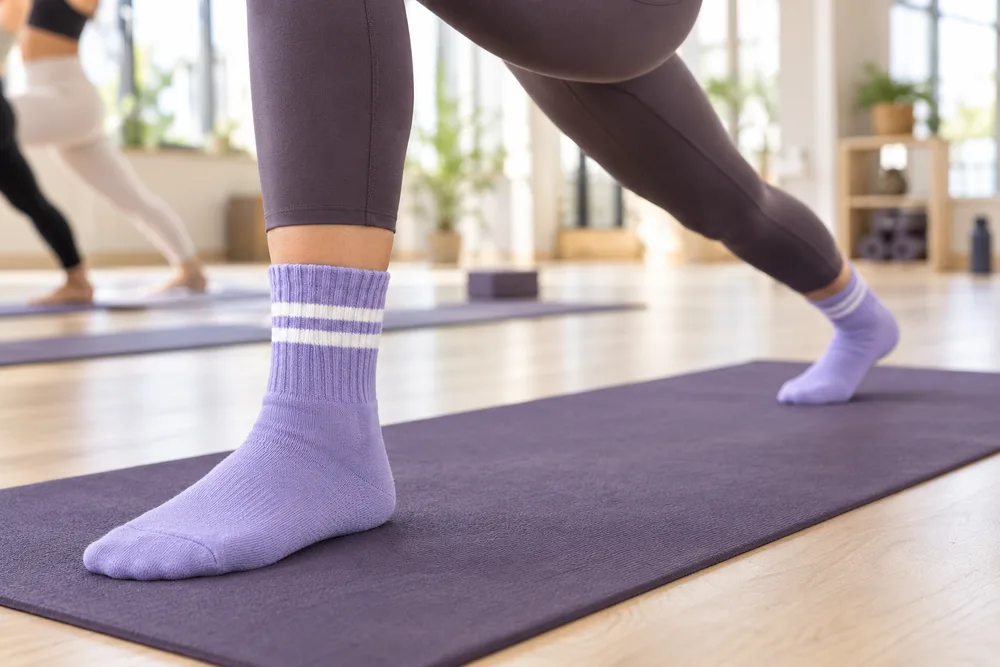
Choose your yoga pack
Pick a pack, a style and your colors. It goes straight to your cart.
Your choice: Crew: Black
🔥 Selling fast — limited stock
Price shown before sales tax.
Prices in US dollars.
Complete your order
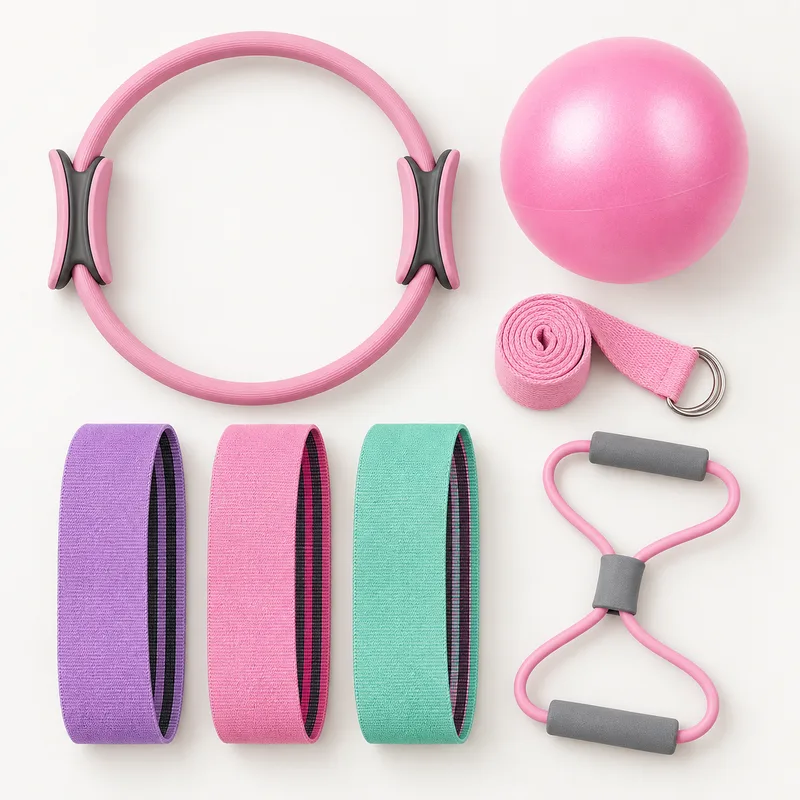
Pilates Kit $39
7 pieces: ring, ball, stretch strap, 3 hip bands, figure-8 expander
Ships in its own parcel, same delivery window.
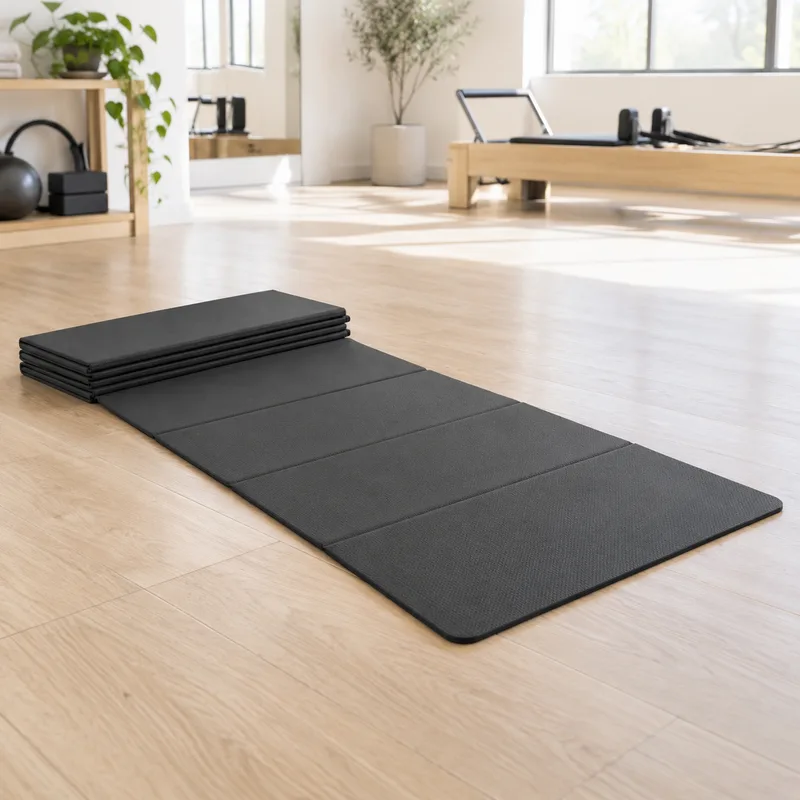
Folding Pilates Mat $29
TPE, 183 × 61 cm, folds flat for travel and small spaces
Ships in its own parcel, same delivery window.
What yoga socks with grips do on the mat
Yoga is taught barefoot because a dry foot holds a dry rubber mat. Four things break that. Feet sweat in a heated room, and a damp sole skates on a mat that held ten minutes earlier. A cold studio sends you to your bag for a sock, and a plain cotton sock has nothing on its sole to catch the mat. A shared studio mat makes you want something between your skin and the last class. And a standing pose that steps off the mat lands on sealed hardwood, a floor that was never meant to hold a foot.
A grip sole changes what touches the mat. Instead of skin or flat knit, the mat meets raised silicone or rubber, materials that give a little under load and cling instead of gliding. Silicone makers put the friction coefficient of the untreated material at about 1.0, which is why grip soles are made of it. The raised pattern also keeps the knit itself off the mat, so your weight sits on the grip and not on the fabric. The non-slip Pilates socks page goes through the sole of each style in detail.
coefficient of friction of untreated silicone, the naturally tacky material used for grip soles
— Jehbco Silicones, The Coefficient of Friction of Silicone, 2017
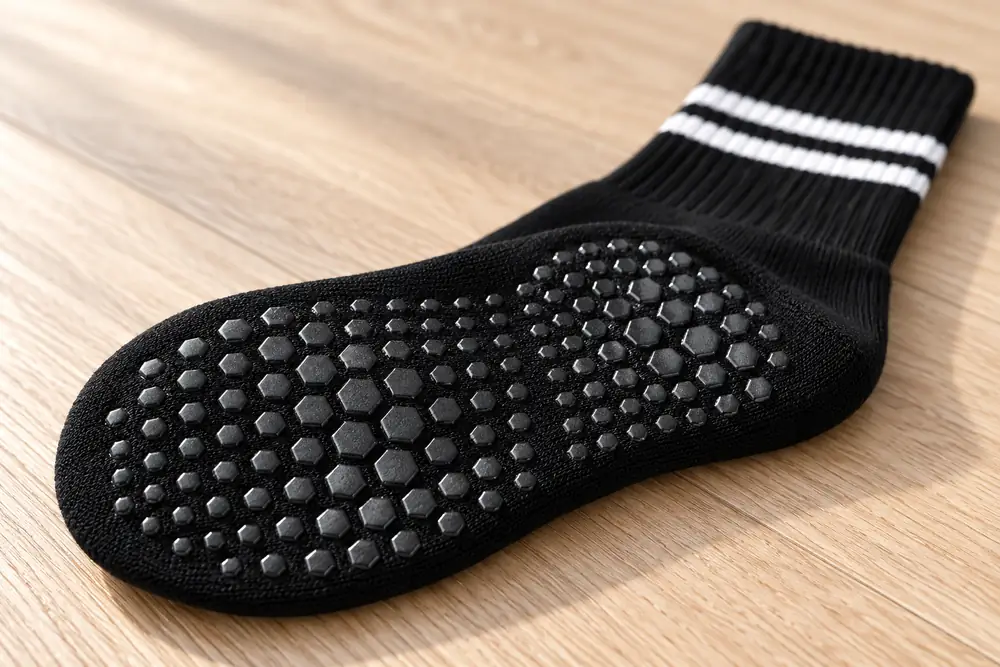
The second half of the job is the fit, and it matters more in yoga than in most classes, because the foot points, flexes and spreads for a whole hour. A grip that holds the mat is wasted if the sock turns around your foot. That is why the crew wraps the arch and holds with a high-elasticity cuff, the ankle holds with a double-loop cuff, and the ballet holds with two straps crossed over the instep. Verified buyers on our reviews page put it in two words: they stay put.
Two conditions apply to any grip sole. The surface has to be dry: silicone clings to a mat, not to a film of sweat on top of it, so wipe a wet mat before the next standing series. And the sole has to be clean: lint from the dryer sits between the grip and the mat. Both take ten seconds, and what sticky really means explains why a sole that drags under your thumb is a sole that is ready.
Crew, ankle or ballet: the three PIVELYA yoga socks
Crew: full-sole silicone for a cool room and a mixed week
The crew is the yoga sock for a cool studio, a slow class, and anyone who also books a reformer. It comes to mid-calf with a high-elasticity ribbed cuff and two stripes, and the cotton and polyester knit wraps the arch of the foot. Underneath, a honeycomb of silicone covers the sole from heel to toe, so the grip is there whether the weight sits on the heels in chair pose or on the ball of the foot in a lunge. Five colors by the pair: Black, White, Pink, Blue Gray, Purple.
Ankle: a padded rubber sole and a flat toe seam for flow and heat
The ankle is the pair I suggest for a flow class and for a heated room. It sits at the ankle bone with a double-loop ribbed cuff, so there is nothing on the calf to hold heat. The spec sheet describes the rubber sole as silenced and non-slip, over a cushioned bottom, and the toe as hand sewn to lie flat on the foot; in a long hold on the ball of the foot, the ridge you do not feel is the thing you notice. The polyester and cotton knit is breathable. Five colors by the pair: Black, Off-white, Gray, Pink, Purple.
Ballet: covered toes, open instep, and straps that hold through a balance
The ballet is the cut for standing poses and for anyone who wants the least sock on the foot. The knit closes over the toes and cups the heel, the top of the foot stays open, and two elastic straps cross the instep to keep the sole seated when the foot points. The spec sheet gives 8.3 in (21 cm) long by 3.1 in (8 cm) wide, laid flat. Three colors by the pair: Black, Gray, Pink. The ballet grip socks page shows the straps on the foot.
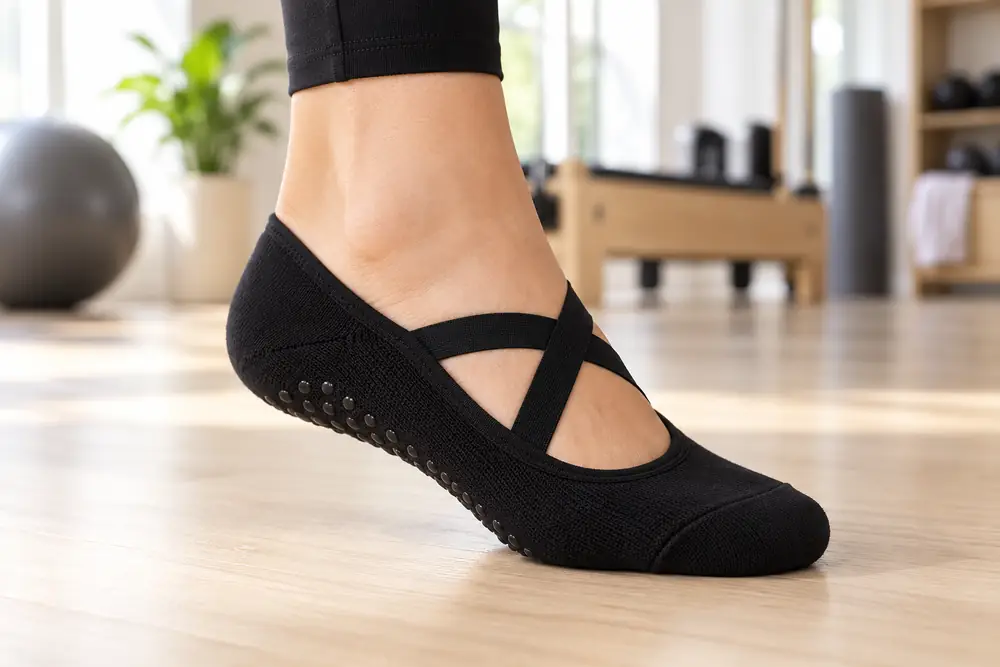
| Style | Cut | Sole | Holds on | Best for | Colors |
|---|---|---|---|---|---|
| Crew | Mid-calf, ribbed cuff | Full-sole honeycomb silicone grip | Mat, cork, hardwood beside the mat, reformer carriage | Cool rooms, yin and restorative, a week that mixes yoga and reformer | Black, White, Pink, Blue Gray, Purple |
| Ankle | Low cut, sits at the ankle | Rubber non-slip sole over a cushioned bottom | Mat, wood, vinyl, a shared studio mat | Flow classes, heated rooms, a low profile under leggings | Black, Off-white, Gray, Pink, Purple |
| Ballet | Cross straps, open instep | Non-slip sole; toes and heel covered, instep open | Mat, wood, the pedal of a Pilates chair | Standing poses, the least fabric on the foot, hot studios | Black, Gray, Pink |
Colors are sold per pair. A 3-pair or 6-pair pack is one style in any mix of its colors.
Which yoga socks for which pose: where the foot presses
Where the foot presses in eight common poses, and the cut I hand out
This is the chart I use when a yoga student asks which of the three styles to buy. Read the middle column first: it says where the weight sits on the sole and what the foot is trying to do. The right column is my recommendation from teaching and from wearing all three, not a measurement.
| Pose | Where the foot presses | Style I suggest |
|---|---|---|
| Downward-facing dog | Heels press back and the balls of the feet push into the mat; the feet want to slide forward | Crew or Ankle |
| Warrior I and II | Outer edge of the back foot and the ball of the front foot, loaded sideways | Crew |
| Tree and other one-legged balances | The whole sole of the standing foot; the sock must not twist while the toes spread | Ballet |
| Chair and goddess | Heels loaded, toes light, the weight moving back | Ankle |
| Low lunge and crescent | Ball of the front foot; the top of the back foot rests on the mat | Ankle or Ballet |
| Stepping through a sun salutation | The foot lands on the mat between poses; this is where a plain sock slips | Crew or Ankle |
| Yin, restorative and savasana | Almost no load on the sole; warmth counts for more than grip | Crew |
| Standing on the hardwood beside the mat | Whole sole on a sealed floor with nothing to hold | Crew or Ankle |
If you take one class a week, buy the style in the row that matches it. If your week mixes standing flow and floor work, a 3-pair pack in the ankle covers most of it, and a crew pair covers the cold days.
Yoga socks for women, for men, and the one-size question
Most yoga socks are sold to women, and so are ours: the ankle and the ballet are listed for women on their spec sheets, and the pink, purple and off-white colors sell by the pair alongside black and gray. Men ask, and the answer is short. The crew is the style whose spec sheet says unisex. It has the high-elasticity cuff and the knit that wraps the arch, and it comes in black, white and blue gray for anyone who would rather skip the pink.
One size means what it says. We publish the one dimension a spec sheet gives, the ballet at 8.3 in by 3.1 in laid flat, and no size range beyond that. If your foot runs large, start with the crew and its stretch. If it runs small, the ankle's double-loop cuff keeps the sock from riding down, and the ballet's straps take up the difference across the instep.
Pilates yoga socks: one pair for both rooms
Sock makers name a grip sock after the class they sell it to, and the people searching for Pilates yoga socks have worked that out: they want a pair that goes to both. Here is how I pack for a week that mixes the two. The ankle is the pair most reformer studios mean when they say grip socks, and it is the pair I take to a heated flow. The crew is the pair for a restorative class and for a footwork series under a reformer strap. The ballet is the pair for standing yoga and for the pedal of a Pilates chair. Our page on reformer Pilates socks compares the three on the carriage exercise by exercise, and the guide to socks for mat Pilates does the same on the floor.
Both rooms are getting fuller, which is why so many people are shopping for one sock that covers two schedules.
year-over-year growth in yoga bookings worldwide in 2025, the second most booked workout on the platform after Pilates
— ClassPass 2025 Look Back Report, 2025
increase in overall Pilates reservations on ClassPass in 2025 versus 2024
— ClassPass 2025 Look Back Report, 2025
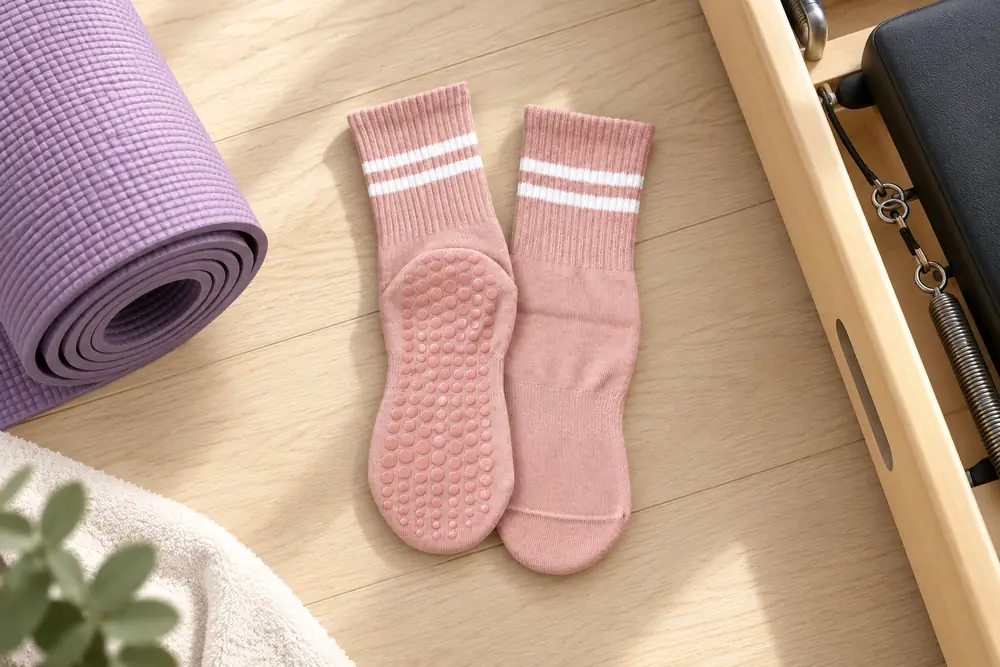
If you want the long version of why one sock serves both rooms, the guide on yoga socks vs Pilates socks goes through it criterion by criterion, and what Pilates socks are explains the construction from the sole up. If you teach, or you buy for a studio, the Pilates socks for studios page covers packs by the half-dozen.
Best yoga socks: the four things I judge before the color
- Grip coverage. A patch under the ball of the foot holds a lunge and lets go in chair pose. The crew carries silicone from heel to toe; the ankle and the ballet carry a non-slip sole under the whole foot.
- What keeps the sock on. A high cuff, a double-loop cuff or two cross straps. Each of the three styles uses one of them, and the choice is the difference between a sock that stays put and one you pull up between poses.
- The toe seam. In a long hold on the ball of the foot, a thick seam is the only thing you feel. The ankle's toe is hand sewn to lie flat; the crew and the ballet close over the toes in knit.
- The knit after washing. A grip sole loses hold in two ways: softener coats it and heat bakes it. Our recommendation, and it is a recommendation rather than a care label, is a cold wash inside out, no softener, air dried flat. The full routine is in how to wash Pilates socks.
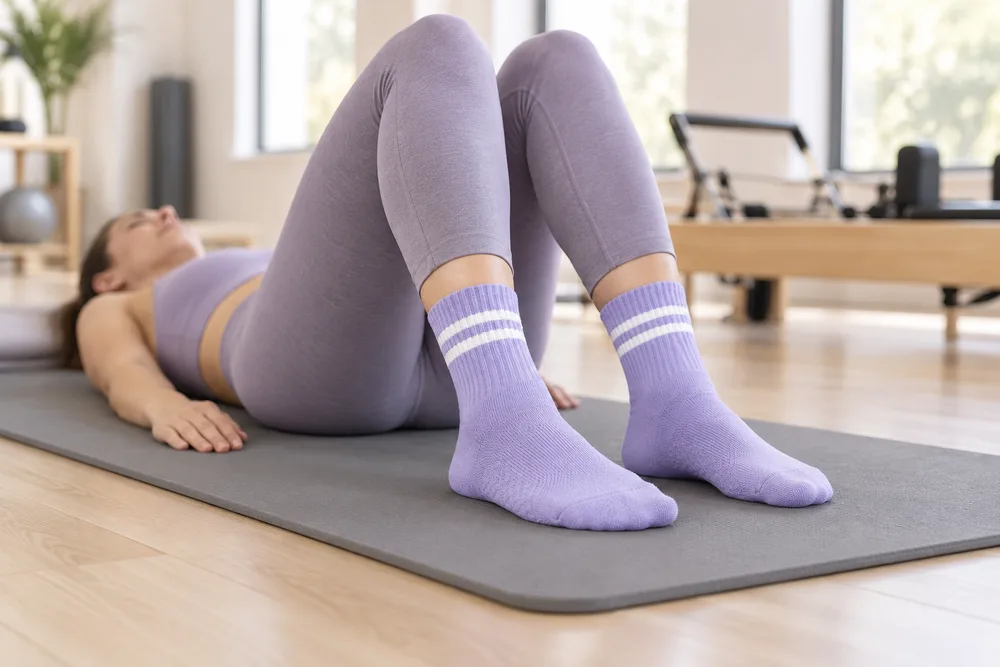
I keep an ankle pair in the yoga bag and a crew pair in the reformer bag, and they swap places all winter. The thing I look for in any yoga sock is the same thing I look for on the carriage: does the sole hold where the foot lands, and does the sock stay where I put it through a full standing series. Everything else is color.Elise Hartley, Pilates instructor, mat and reformer since 2017
Buyers rate the range 4.9 / 5 across 1410 verified ratings; the comments that mention yoga are grouped on the reviews page. The criteria we use to judge a grip sock, from the grip pattern to the cuff, the straps and the seam, are on how we test, and the PIVELYA home page shows the full range.
Who wrote this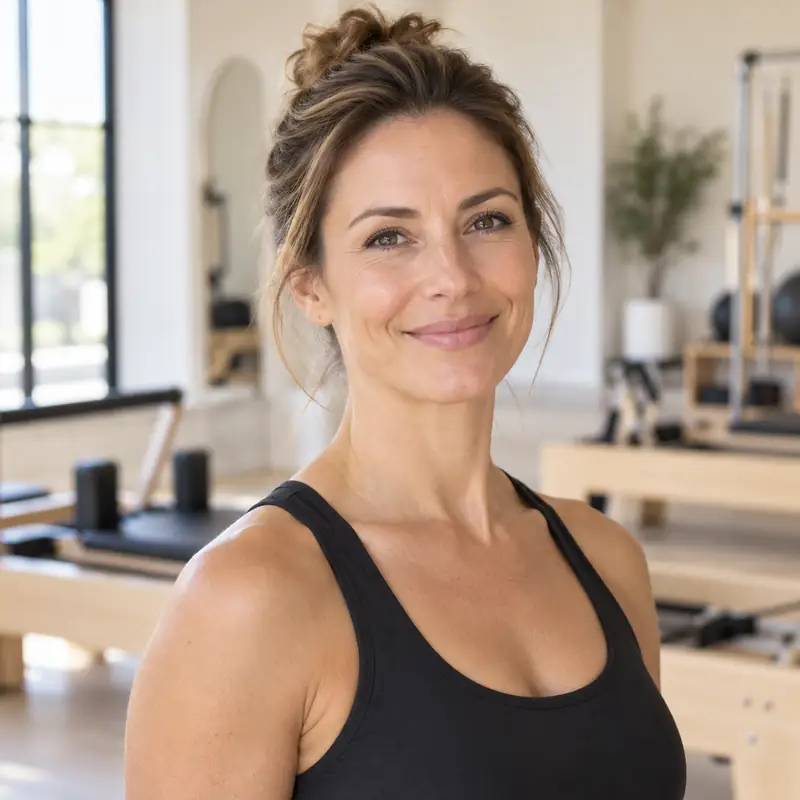
Elise Hartley · Pilates instructor · mat & reformer since 2017
Elise teaches mat and reformer Pilates and has worn and compared more than 40 pairs of grip socks on wood floors, reformer carriages and rubber mats since 2017. She writes every guide on this site and checks each product claim against the spec sheet's own data.
Yoga socks: your questions
Are yoga socks a good idea?
Yes, in four situations: a heated class where the feet sweat, a cold studio where you would otherwise wear a plain sock, a shared mat you would rather not touch barefoot, and any standing pose that steps off the mat onto hardwood. A grip sole holds on the mat where a bare or sock-covered foot slides. At home on a dry mat, the sock is a comfort choice.
What kind of socks should I wear to yoga?
A sock with a non-slip sole, cut so that it stays on a pointed and flexed foot. For most yoga classes I suggest the ankle: low, breathable, with a rubber sole and a flat hand-sewn toe seam. Take the crew for a cool room and the ballet when you want the least fabric on the foot. A plain cotton sock slides on a mat.
What is the difference between yoga socks and Pilates socks?
Mostly the name on the packet. Both are a knit sock with a grip sole, and both go to both classes. In practice, a yoga class loads the sole in standing poses on a mat, while a Pilates class puts the foot on a moving carriage, a footbar and straps, so the cuff or the straps matter more there. Our yoga vs Pilates guide covers the rest.
What are yoga socks used for?
Yoga socks are used to keep the foot in place on a mat or a studio floor, to keep skin off a shared mat, and to keep the feet warm in a cool room. The grip sole does the first job; the knit does the other two. People also wear them for Pilates, barre and at home on hardwood, which is why one pair covers a week of classes.
Are PIVELYA yoga socks toeless?
No. All three styles cover the toes. The crew and the ankle are closed socks. The ballet is cut like a dance slipper: closed over the toes, closed at the heel, open across the top of the foot, with two straps crossing the instep. You keep a covered toe on the mat and lose the fabric over the arch, which is the part that gets warm first.
Do yoga socks come in men's sizes?
All three PIVELYA styles are one size, with no separate men's size. The spec sheet lists the crew as suitable for unisex wear and describes its cuff as high-elasticity, so the crew is the style I hand to a man who asks. For the ballet, the spec sheet gives 8.3 in by 3.1 in laid flat.
Which yoga socks are best for hot yoga?
The ankle or the ballet, because both put the least fabric on the foot. The ankle's polyester and cotton knit is described as breathable on its spec sheet, and the ballet leaves the top of the foot open. The knit sits between a damp foot and the mat, so the grip does the holding; wipe a wet mat, because a grip sole holds on a dry surface.