
· Elise Hartley
Pilates socks for mat Pilates: when the grip earns its place
Most of what is written about grip socks is written for the reformer, where the carriage moves and the foot must not. A mat does not move. That changes the job of the sock, and it is why the question comes up so often from people who only take mat classes. This guide answers it by surface and by exercise: what the mat itself already does, the moments when a grip sole takes over, and which of the three PIVELYA styles suits each one. I teach mat classes on thick home mats and on thin studio mats, and the advice below is the one I give in the room.
What a mat asks of your feet
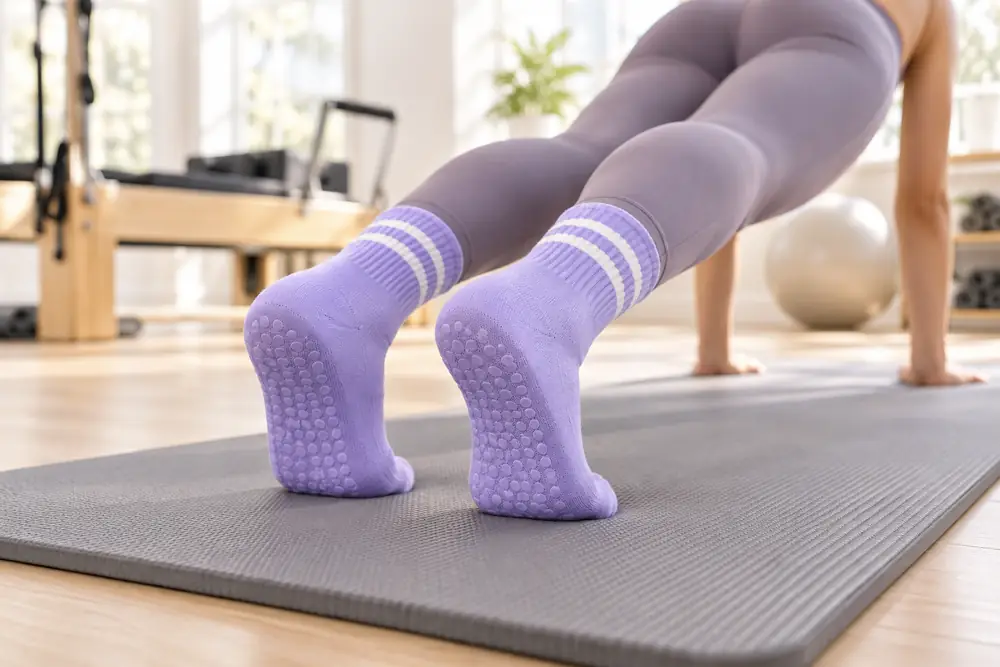
On a reformer, the sock keeps the foot still on a surface that moves. On a mat, the surface stays still and the foot pushes into it. Think of a plank: the balls of the feet press back into the mat while the body holds. Think of a bridge: the heels drive down and slightly away. Think of a standing leg series or a lunge: the whole weight of the body loads one foot on a small patch of mat, or on the floor beside it.
A good rubber mat gives the foot some texture to press into, which is why barefoot mat work feels natural to so many people. The grip sole becomes useful when that texture is thin, smooth, damp or shared, and it becomes useful the moment the foot starts to load, hold or push. In practice the answer changes from one exercise to the next, and from one mat to the next. The table below sorts it out.
Mat by mat: when grip helps, and which style
Five situations cover almost every mat class I have taught. The middle column says what the sole does in each one, and the last column names the PIVELYA style that fits it best.
| Mat situation | Where the grip works | Style we suggest |
|---|---|---|
| Thick, cushioned mat at home | In the exercises that load the foot: planks, bridges, lunges. As the foam compresses under the heel or the ball of the foot, a bare heel creeps and a grip sole holds. In the rest of the session the mat does most of the work. | Ballet: grip under the ball of the foot and the heel, cross straps over the instep to keep the sock on |
| Thin studio mat over a hard floor | Yes, throughout. A thin mat is smooth and does not give, so the foot meets almost the same surface as the floor underneath. The sole holds in planks, side kicks and roll-downs where a bare foot slides. | Ankle: cushioned bottom, flat-sewn toe, low cuff |
| Standing work: lunges, standing leg series, planks on hands and feet | Yes. The foot leaves the mat or loads the ball of the foot hard. Grip on the hardwood or tile beside the mat holds where skin and plain cotton skate. | Ankle or crew: full-sole grip, a cuff that stays up |
| Heated or fast-paced class | Yes. A warm room means damp feet, and a damp foot slides on any smooth surface, mat included. Silicone and rubber keep their hold where damp skin loses it. | Ballet or ankle: less sock, more air, grip where the foot loads |
| Shared mat in a studio | Yes, and many mat studios ask for it. A sock keeps bare skin off a mat that a dozen people used before you, and the grip holds on the wiped-down, slightly slick surface a shared mat has. | Crew or ankle: the whole foot covered |
If you only remember one line, remember this one: the thicker and drier your own mat, the more the mat does on its own, and the thinner, smoother, damper or more shared the mat, the more the grip sole does.
Four moments when the sole does real work on a mat
A thin or smooth mat
Studio mats are often thinner than the one you have at home, because they stack and wipe down easily. Travel mats and older mats that have gone shiny behave the same way. On that surface a bare foot has almost nothing to press into, and a plain cotton sock is worse: the fabric slides on the mat and the foot slides inside the fabric. A sole with silicone dots or a honeycomb pattern holds on that surface the way it holds on a reformer carriage. The crew style carries its silicone honeycomb across the full sole, so there is grip under the heel, the arch and the ball of the foot at the same time.
Standing work and anything on hands and feet
Mat classes are not spent lying down. A standing leg series, lunges, a roll-down into a plank, mountain climbers, and the step from the mat to the floor and back all put weight on the ball of the foot. Planks on hands and feet are the clearest case: the feet press back the whole time, and if the heel creeps, the plank goes with it. On a thick mat the foam compresses and the heel creeps. On the hardwood or tile beside the mat, a bare foot skates as soon as it warms up. Grip under the ball of the foot answers both. The ankle style has a cushioned bottom and a toe that is hand-sewn flat, so nothing bunches under the foot while it loads. Relevés at the barre load the ball of the foot the same way, and our barre socks guide covers that floor.
A heated or fast class
Heated mat classes are where people who go barefoot at home change their minds. Warm room, damp feet, a mat that has just been wiped down: every surface turns slick at once. On a wiped mat, a silicone or rubber sole holds where skin loses it. If your studio runs a heated or high-tempo mat class, treat the socks as part of the kit, the same way you would for a heated reformer class. The ankle style is knit to breathe, which matters in a warm room, and our page on non-slip Pilates socks explains how the pattern holds on a damp surface.
A shared mat in a studio
A studio mat sees a lot of feet in a day. Mat studios are less strict than reformer studios about socks, but a growing number write them into the policy for the same hygiene reason, and more do so as classes fill up. The numbers explain why the mats are getting busier.
year-over-year growth in Mat Pilates bookings on ClassPass in 2025, the highest growth rate of the platform's three top Pilates formats
— ClassPass 2025 Look Back Report, 2025
increase in overall Pilates reservations on ClassPass from 2024 to 2025, after three years as the most-booked workout on the platform
— ClassPass 2025 Look Back Report, 2025
More people on the same mats means the shared-mat argument comes up more often at the front desk. Whether your studio requires socks or only suggests them, the studio rules by class type are laid out in our guide to whether you need grip socks for Pilates.
Mat Pilates socks or barefoot?
Barefoot works on your own dry rubber mat, and plenty of instructors like it for the direct contact with the surface. The sock takes over at the four moments above: a thin mat, standing work, heat, a shared surface. Most people who take both kinds of class settle into a simple habit: barefoot for a slow floor session at home, and a pair of grip socks in the bag for everything else.
The ballet style is the answer for anyone who wants the least fabric on the foot and still wants the hold. The toes and the heel are covered, the instep is open, the crossed straps keep the sock in place, and the non-slip sole sits under the ball of the foot and the heel, which is exactly where a mat exercise loads. The spec sheet gives 8.3 in (21 cm) long by 3.1 in (8 cm) wide, one size. Our page on ballet grip socks goes through the cut and the fit in detail.
Crew, ankle or ballet: which mat Pilates socks to choose
All three PIVELYA Pilates grip socks styles carry a grip sole and come in one size. A pack is one style, and each pair in it can be a different color. The choice is about the room and the exercise.
| Style | On the mat | What the product sheet documents |
|---|---|---|
| Crew | Cold floors, shared mats, anyone who wants the whole foot and the lower leg covered | Mid-calf cut with a high-elastic ribbed cuff that wraps the arch of the foot. Full-sole silicone honeycomb grip. Cotton and polyester knit. Five colors. |
| Ankle | Thin studio mats, standing work, heated classes | Low cut with a double-loop ribbed edge and a cushioned bottom. Rubber sole described as silenced and non-slip, toe hand-sewn flat, breathable knit. Five colors. |
| Ballet | Thick home mats, anyone who wants the least fabric on the foot | Slipper cut with crossed straps over the instep, covered toes and a non-slip sole. Polyester knit. 8.3 in long by 3.1 in wide on the spec sheet. Three colors. |
If your week mixes mat and reformer, the grip that holds on a carriage holds on a mat too, and our guide to reformer Pilates socks covers the cuff and the fit for the carriage. Verified buyers use the same three words across all three styles on the reviews page: they stay put, they do not slide, and they are soft.
Questions people ask about socks for mat Pilates
Should you wear grippy socks to mat Pilates?
Wear them when the mat is thin, shared or damp, and for any class with standing work. On your own thick mat at home, they earn their place in planks, bridges and lunges, where the heel creeps as the foam compresses. Most people who own a pair end up wearing them for every class, because the foot stays where they put it and the pair lives in the bag next to the water bottle.
What do you wear on your feet for mat Pilates?
Bare feet or grip socks. Sneakers stay at the door: a shoe sole on a mat is loud, it marks the surface, and it takes away the foot articulation that mat work is built around. Plain cotton socks are the one thing to leave at home, because the fabric slides on the mat and the foot slides inside the sock. If you want something on your feet, make it a pair with grip underneath.
Are grip socks the same as Pilates socks?
Yes in practice. Pilates socks is the name the studio world gives to grip socks: a knit sock with silicone or rubber on the sole, so the foot holds on a smooth surface. Some pairs are cut open at the toes or add straps over the instep, but the sole is what makes the sock. A sock without grip underneath is not a Pilates sock, whatever the label says. Our guide on what Pilates socks are covers the anatomy piece by piece.
Do you need socks for mat Pilates in a studio?
Check the policy in the booking email. Reformer studios require grip socks almost everywhere. Mat studios vary, and a growing number ask for them because the mats are shared. Where the policy is silent, the surface decides: a thin mat, a heated room and standing work all reward a grip sole. Packing a pair means the rule is never a surprise.
Is it better to do Pilates barefoot or wear socks?
On a dry, thick rubber mat at home, barefoot works and many people like the direct contact. On a thin, damp or shared mat, and on the floor beside it, a grip sole holds where bare skin slides. The ballet style is the middle ground: the least fabric on the foot, grip under the ball of the foot and the heel.
Do you need grip socks for reformer Pilates?
In most studios, yes. The carriage moves, the upholstery is smooth and the equipment is shared, which is the exact opposite of a thick mat at home. If you split your week between the two, one pair with a full-sole grip covers both rooms.
What to pack for your next mat class
Pick the style from the table: ballet for a thick mat at home, ankle for a thin studio mat, standing work and heated rooms, crew for cold floors and shared mats. A three-pair set in the style that matches your usual mat, in three colors, covers three classes between washes and leaves a clean pair ready while the others dry. Free shipping and a 30-day money-back guarantee apply to every set.
Elise Hartley · Pilates instructor · mat & reformer since 2017
Elise teaches mat and reformer Pilates and has worn and compared more than 40 pairs of grip socks on wood floors, reformer carriages and rubber mats since 2017. She writes every guide on this site and checks each product claim against the spec sheet's own data.
Choose your pack
Pick a pack, a style and your colors. It goes straight to your cart.
Your choice: Ballet: Black
🔥 Selling fast — limited stock
Price shown before sales tax.
Prices in US dollars.
Complete your order
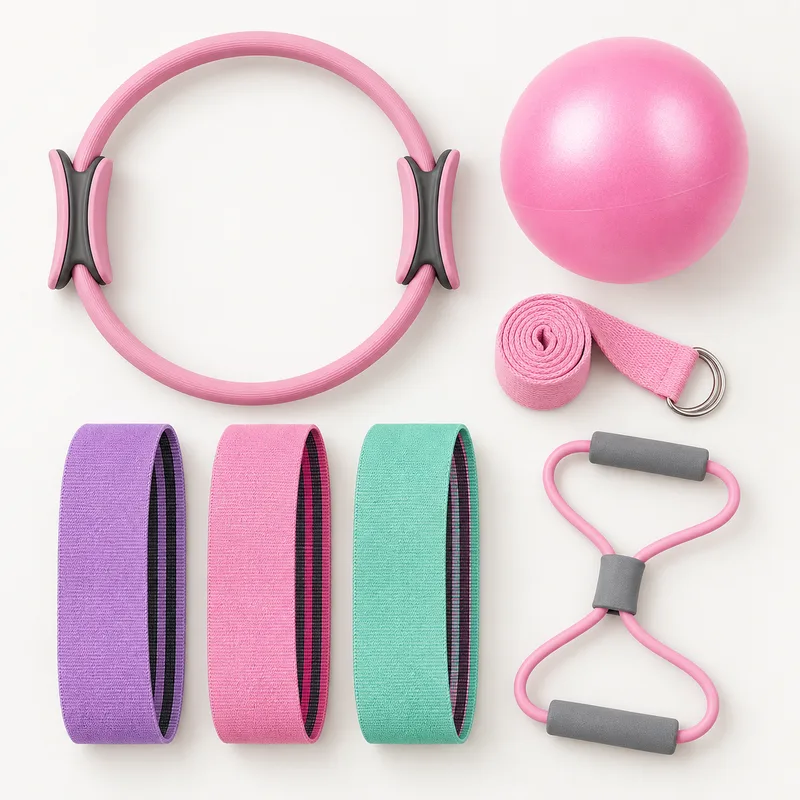
Pilates Kit $39
7 pieces: ring, ball, stretch strap, 3 hip bands, figure-8 expander
Ships in its own parcel, same delivery window.
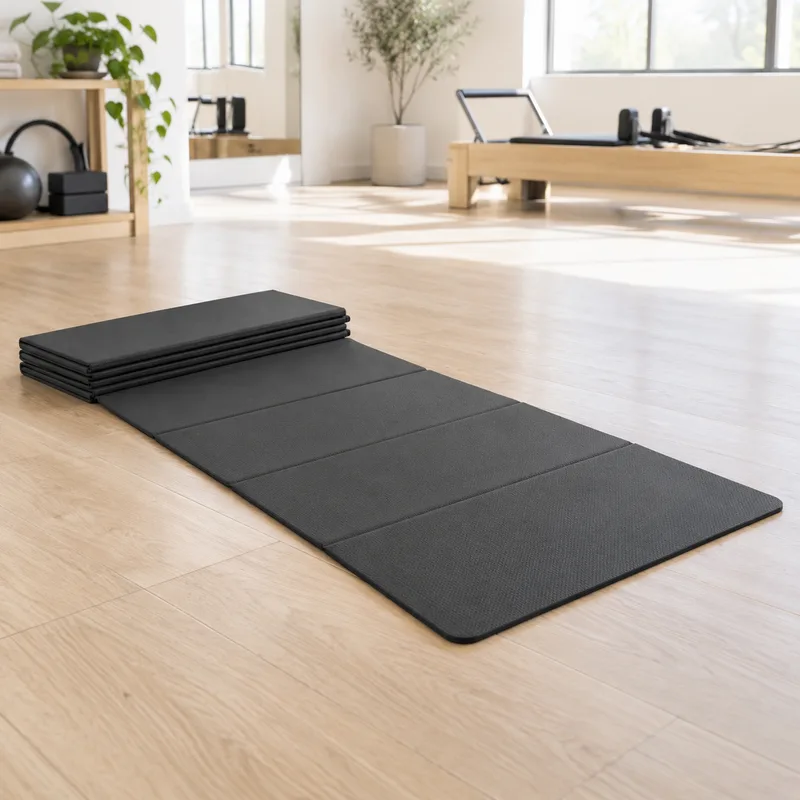
Folding Pilates Mat $29
TPE, 183 × 61 cm, folds flat for travel and small spaces
Ships in its own parcel, same delivery window.