
· Elise Hartley
How to Wash Pilates Socks and Keep the Grip Sticky
A grip sock almost never loses its grip in class. It loses it in the laundry: a hot dryer, a capful of softener, a sole rubbing against a zipper in the drum. I have washed more grip socks than I can count since 2017, for myself and for the loaner basket at the studio, and the pairs that went slick early all went through the same two things, heat and softener. This guide is the routine I use and recommend. Read every line as what works in our experience, not as a manufacturer's instruction, and apply it to any grip sock you own, including the three PIVELYA styles.
Why the laundry, not the class, wears out a grip sock
The sole of a grip sock is a field of silicone or rubber dots on a knit. It holds on a wood floor or a reformer carriage because the surface of those dots is soft and slightly tacky. Two things take that tack away, and both live in the laundry room.
The first is a film. Fabric softener works by leaving a thin coating on fibers, which is what makes a towel feel fluffy. As a general principle, that coating settles on anything it touches in the drum, and a silicone dot with a coating on it is a slick dot. Sweat, detergent residue and studio floor dust build the same kind of film more slowly, which is why a pair that has skipped a few washes feels less sure underfoot even when the dots look fine.
The second is heat. Silicone is soft when it is cool and it holds its shape at room temperature. Press it against a hot metal drum for forty minutes and, in our experience, the dots come out flatter, harder, and sometimes lifted at the edge. The knit shrinks a little too, so the sole no longer sits where it should under the ball of the foot. Our guide to sticky socks for Pilates explains what the grip is doing when it works; this guide is about keeping it that way.
How to wash Pilates socks in the washing machine
The machine is fine. What matters is what you do before you press start, and which settings you pick.
Before the wash: inside out, in a mesh bag
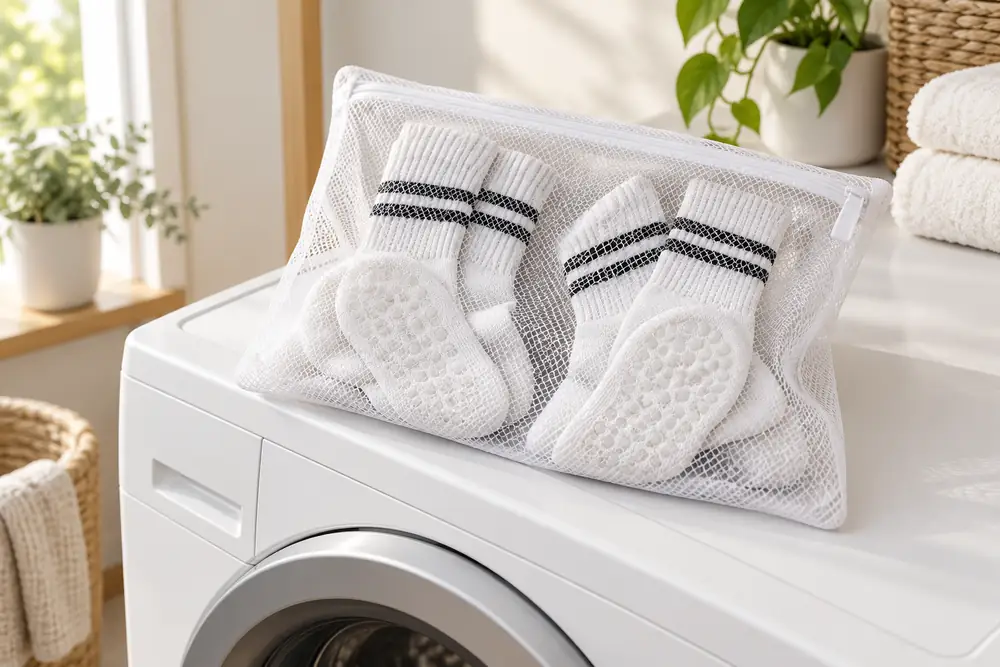
Turn each sock inside out so the grip faces in. The knit takes the rubbing from the rest of the load, and the dots ride on the inside where nothing scrapes them. Then close the pair in a mesh laundry bag. The bag does two jobs: it keeps the sole away from zippers, bra hooks and buttons, and it keeps the pairs together, so you never fish a single grip sock out of a fitted sheet.
The cycle: cold or warm, gentle, regular detergent, no softener
We recommend cold or warm water and a gentle or delicates cycle. My rule of thumb: if the water would be uncomfortable to hold your hand in, it is too hot for the sole. Use your regular detergent in the normal amount. Leave the softener out entirely, including the dryer sheets, which carry the same coating. If your machine has an extra rinse option, use it: less residue on the knit means less film on the dots.
Cold water is also the setting your utility bill prefers, which makes the choice easy.
of the energy it takes to run a clothes washer goes to heating the water, so a cold cycle is the low-energy setting as well as the grip-friendly one
— ENERGY STAR, Clothes Washers, 2026
How to wash grip socks by hand
Hand washing is my choice after a sweaty reformer class when the rest of the laundry can wait. Fill a basin with cool water and a small amount of detergent, turn the socks inside out, and squeeze the knit gently for a minute or two. Rinse until the water runs clear, then press the water out between your palms. Do not wring: twisting the knit stretches the cuff and pulls at the seam. Lay the pair flat on a towel, roll the towel once to take the last of the water out, and move on to drying.
The routine at a glance: how to wash Pilates socks, why, and what it does to the grip
This is the table I keep taped inside the laundry closet at the studio. Every line is our recommendation, built from washing loaner pairs week after week.
| Step | Why we do it | Effect on the grip |
|---|---|---|
| Turn the sock inside out | The dots face inward, away from the rest of the load | No scraping on the silicone; the dots keep their edges |
| Close it in a mesh laundry bag | Zippers, hooks and buttons cannot reach the sole | No torn or lifted dots; pairs stay together |
| Cold or warm water | Silicone and the knit both keep their shape without heat | The dots stay soft and tacky; the sole stays where it belongs on the foot |
| Regular detergent, normal dose | Sweat and floor dust wash out without extra residue | Cleaner dots hold better than dots under a film |
| No fabric softener, no dryer sheet | Softener leaves a coating on everything it touches | No slick film on the dots; this is the single biggest difference we see |
| Gentle or delicates cycle | Less spinning and rubbing on a thin knit | Less stress on the seam that holds the sole in place |
| Air dry flat or on a rack | A knit sock dries overnight on its own | Zero heat on the silicone, so the dots keep their height |
| No heated dryer | A hot drum flattens and hardens silicone in our experience | Avoids the most common way a grip sock goes slick |
| No iron, ever, on the sole | A hot plate on silicone deforms the dots on contact | Keeps the dots intact; the knit does not need pressing anyway |
| Wash after every class | Sweat and dust have less time to settle on the dots | Grip stays consistent from one class to the next |
Can you put grip socks in the dryer?
Our answer is no, not on a heated cycle. The dryer is the most convenient machine in the house, which is exactly why it ruins more grip socks than any other step.
of American homes have a clothes dryer, which is why the dryer, and not the washer, is where most grip soles meet heat
— ENERGY STAR, Clothes Dryers, 2026
What we recommend instead takes no extra time. Take the pair out of the mesh bag, turn it right side out, and lay it flat on a drying rack or a towel, sole up so air reaches the dots. A thin knit sock is dry by the next morning. If you are in a hurry and the machine is the only option, use the air-only or no-heat setting and keep the pair in its mesh bag. In our experience that is the one dryer setting that leaves the dots as they went in.
One more thing to keep away from the sole: the iron. Nobody irons socks on purpose, but a grip sock left on the ironing board under a warm shirt picks up enough heat to flatten a row of dots. Keep the pairs on the rack until they go back in the drawer.
How to make grip socks grippy again
Start with the easiest fix. If a pair has been washed with softener, or has skipped a few washes, the dots are probably still whole and just coated. Run the routine above once, with regular detergent and no softener, and add the extra rinse. In our experience most pairs come back after one or two washes like that, because you are taking the film off rather than repairing anything.
Then turn the sock over and look at the dots in good light. If they stand up from the knit with clean edges, the grip is there and a wash will bring it back. If the dots are flattened, cracked, or lifting at the edge, the silicone itself has changed, and no wash brings that back. That pair moves to the bottom of the rotation for home practice on a carpet, and a fresh pair takes its place on the reformer.
How long do grip socks last?
There is no number of months to give you, because the answer depends on three things: how many classes a week the pair sees, what surface it works on, and how it is washed. A pair worn three times a week on a wood floor and dried on a hot cycle ages far faster than the same pair rotated with two others and air dried. What I can give you is the list of wear signs I check on my own socks and on the studio basket.
- Flattened dots. Run a fingertip across the sole. If the dots no longer catch the skin, the grip is going.
- Cracked or peeling dots. Look at the edge of each dot. A clean edge is fine; a lifted or split edge means the silicone has taken heat.
- A slick sole after a softener-free wash. If the routine above did not bring the grip back, the dots are done.
- A thinning knit at the ball of the foot or the heel. Stretch the sock against the light. If you can see through it where the grip sits, the sole is about to move on the foot.
- A cuff that stops snapping back. A sock that creeps down takes the grip with it, whatever state the dots are in.
Rotation does more for longevity than any single wash setting. A pair that goes back on a foot before it has dried fully stretches more and holds more residue. With three pairs of one style, you have one pair per class in a three-class week and every pair gets a full day on the rack. With six pairs, you cover daily practice and still have a spare in the bag for a class you did not plan. The 3-pair and 6-pair packs at the end of this guide are built for exactly that rotation, in any mix of colors you like.
White and light-colored grip socks
White, off-white and pink pairs follow the same routine, with two adjustments. Wash them with lights only, so a dark load never grays the knit. And treat a stain on the knit, never on the sole: rub a little detergent into the fabric before the wash, and keep bleach away from the dots. We keep chlorine bleach out of grip sock loads altogether, because a clean sole matters more to us than a bright cuff, and the knit comes back plenty bright with detergent alone.
How to wash Pilates socks in bulk for a studio
Studios that keep a basket of loaner pairs at the front desk wash more grip socks in a month than most clients wash in a year, so the routine has to be simple enough to survive a busy Saturday. Ours is: one mesh bag per basket, everything inside out, cold gentle cycle, no softener, and a folding rack that stays open overnight. The pairs are dry and paired by the first class on Sunday. The Pilates socks for studios page covers how we set up a basket of the three styles and what a client expects to find in it.
Questions people ask about how to wash Pilates socks
Can I put grip socks in the washing machine?
Yes. We recommend turning them inside out, closing them in a mesh laundry bag, and running a gentle cycle in cold or warm water with regular detergent and no fabric softener. The bag keeps the silicone sole away from zippers and hooks in the drum.
How to make grip socks grippy again?
In our experience the grip usually comes back after a wash with detergent and no softener, because what dulls it is a film of softener, sweat and floor dust sitting on the silicone. If the dots are cracked, flattened or missing, no wash brings them back, and it is time to rotate in a fresh pair.
Can grippy socks go in the dryer?
We recommend against any heated dryer cycle. Heat is what hardens and flattens silicone in our experience. Lay the socks flat or hang them on a rack; a thin knit sock is dry by the next morning. If you must use the machine, choose an air-only setting with no heat.
How long do grip socks last?
It depends on how many classes a week the pair sees and on how it is washed, so the useful answer is a list of wear signs rather than a number: dots that flatten, crack or peel, a sole that stays slick after a softener-free wash, and a cuff that stops snapping back. Rotating three or six pairs spreads the wear and gives each pair time to dry fully.
Where to go next
Wash cold, dry flat, skip the softener, and rotate. That routine works on every grip sock we have worn. If you are choosing your next pair, the criteria are in how to pick the best Pilates socks, and the sole itself is explained on the non-slip Pilates socks page. Verified buyers describe how the PIVELYA styles hold up on the reviews page, and the PIVELYA home page lays out the three styles, the thirteen colors, and the packs of one, three or six pairs. The 3-pair pack, the rotation I recommend for most schedules, is below.

Elise Hartley · Pilates instructor · mat & reformer since 2017
Elise teaches mat and reformer Pilates and has worn and compared more than 40 pairs of grip socks on wood floors, reformer carriages and rubber mats since 2017. She writes every guide on this site and checks each product claim against the spec sheet's own data.
Choose your pack
Pick a pack, a style and your colors. It goes straight to your cart.
Your choice: Crew: Black
🔥 Selling fast — limited stock
Price shown before sales tax.
Prices in US dollars.
Complete your order
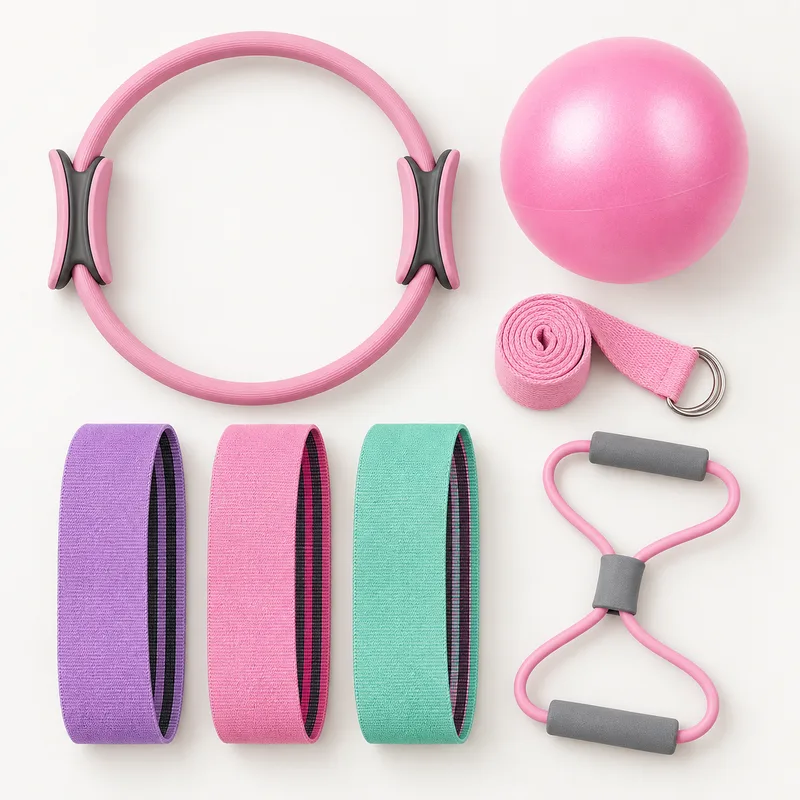
Pilates Kit $39
7 pieces: ring, ball, stretch strap, 3 hip bands, figure-8 expander
Ships in its own parcel, same delivery window.
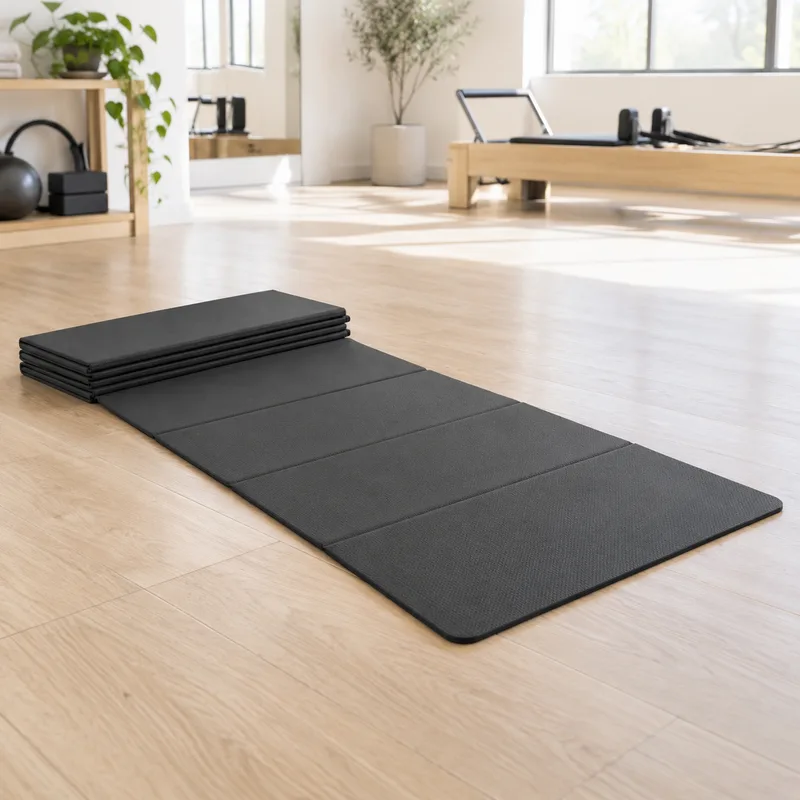
Folding Pilates Mat $29
TPE, 183 × 61 cm, folds flat for travel and small spaces
Ships in its own parcel, same delivery window.