
· Elise Hartley
Sticky Socks for Pilates: How a Sole Can Be Sticky Without Being Glued
The first time a client asks me where to buy sticky socks, she usually looks a little worried, as if the sock were going to leave something on the studio floor. It will not. The word describes how the sole feels under your weight, not what it does to the surface. This guide sorts out the four words people use for the same sock, explains how a silicone sole holds, gives you a way to judge how much grip your class asks for, and ends with the care routine that keeps a sole sticky. I teach mat and reformer classes and have worn more than forty pairs since 2017, so the observations here come from the studio floor, with the three PIVELYA styles as worked examples.
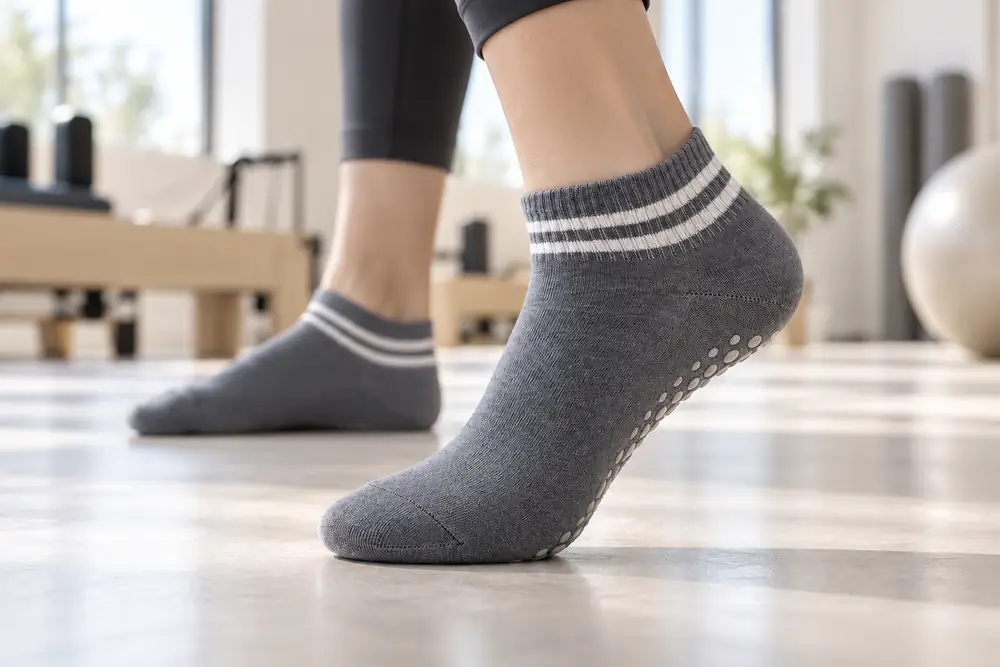
Sticky, grippy, non-slip, grip: four words, one sole
Nobody in a studio is confused by these words, because they all point at the same object. What changes is who says them. A first-timer says sticky, or sticky grip socks when she wants to be precise. A regular says grippy. The dress code says non-slip or grip. The table below puts the four side by side, with what the speaker usually means and what the word actually describes.
| Term | What people mean when they say it | What it actually describes |
|---|---|---|
| Sticky socks | A sock that feels like it clings to the floor. The word a newcomer picks up from the front desk or from a friend. | A knit sock with raised silicone on the sole. Nothing adhesive: the silicone is tacky by nature, it holds through friction and leaves nothing behind. |
| Grippy socks | A sock that grips the mat. The word buyers use after a few classes, when they describe what their feet did. | The same sole, named by what the foot does on it: it holds where a plain sock would glide. |
| Non-slip socks | The catalog name. What a studio writes in its dress code and what the packaging says. | The same sole again, named by the result: the foot does not slide on a smooth surface. Our non-slip Pilates socks page goes through the construction. |
| Grip socks | The short name. Also used for soccer and hockey socks, which is where the search results wander off. | For Pilates, the same sock. In soccer and hockey the grip sits inside a shoe or a skate and works against the insole. Different job, same word. |
One more search result deserves a sentence, because it sits right next to Pilates socks in the results: hospital sticky socks and baby sticky socks. Those are thick socks with a coarse rubber tread, made for walking on a ward floor or a nursery floor. A Pilates sock is a thin knit made for a footbar and a carriage, and the two do not swap. If you want the longer version of what a Pilates sock is and where it came from, read what are Pilates socks.
How sticky socks hold: silicone friction, not glue
Turn a grip sock over and press the sole against a table with your palm. Then lift it. Nothing stays on the wood, and nothing on the sole has changed. The hold you felt is friction, and it comes from what silicone is rather than from anything applied to it.
Silicone is soft. Under the weight of your foot, each dot flattens a little and settles into the tiny texture of the floor, the carriage upholstery or the mat. More of the dot touches the surface, and the dot resists being dragged sideways. Lift the foot and the dot springs back to its shape. That is the whole mechanism: a soft, tacky material that presses into a surface under load and lets go as soon as the load is gone. Manufacturers of the raw material describe it in one number.
coefficient of friction of untreated silicone, which its makers describe as naturally tacky
— Jehbco Silicones, The Coefficient of Friction of Silicone, 2017
A coefficient of friction near 1 means, in plain words, that it takes roughly as much sideways push as the weight pressing down before the material starts to slide. For everyday materials that is a high number, and it is the reason a grip sole is made of silicone or rubber rather than of something harder. The same source notes that a thin film of water on the silicone acts as a lubricant and lowers that number, which matches what every instructor sees in a heated room: a sweaty sole holds less than a dry one, and a sole with a film of fabric softener on it holds less than a clean one. Both come back in the care section below.
On the three PIVELYA styles, the mechanism is the same and the pattern differs. The Crew carries a honeycomb of silicone across the full sole, heel to toe. The Ankle uses a rubber sole that the spec sheet describes as silenced and non-slip, over a cushioned bottom. The Ballet has a non-slip sole under a covered toe and an open instep, so the ball of the foot and the heel sit on the grip while two cross straps hold the sock on.
How much grip you need, by floor and by class
Grip is not a dial you turn up. Enough grip is the amount that keeps your foot where you put it during the hardest moment of the class: the heel on the footbar with the carriage moving, or the standing foot in a lunge on hardwood. More than that shows up as a sole you notice under your foot. The table gives you the order in which the surfaces ask for grip.
| Surface or class | What the foot does there | How much grip the surface asks for |
|---|---|---|
| Reformer carriage and footbar (vinyl upholstery, padded bar) | Footwork on heels and toes, feet in straps, weight on a moving carriage | The most. Coverage from heel to toe matters, because the heel is on the bar in footwork and the toes carry the relevé. Our reformer Pilates socks page is built around this surface. |
| Hardwood or laminate studio floor (mat class, barre) | Standing work, lunges, pliés and relevés beside the barre | A lot on the standing foot. Wood is smooth on purpose, and a plain sock skates on it. |
| Rubber or PVC mat | Long holds, planks, side-lying series, rolling through the spine | Less. The mat already holds. A thin sole with a low pattern lets you feel the mat, which is where the ballet style, thin and light, earns its place. |
| Carpet at home | Mat work in the living room | The least. Knit alone holds on carpet. The grip still helps on the hardwood beside the mat and in a plank on a thick mat. |
Read the table from the top: if your sock holds on the reformer, it holds everywhere below. That is why I tell clients who take mixed classes to buy for the carriage and wear the same pair on the mat, rather than the other way round.
Too many dots, or dots that stand too tall
Here is a thing I notice in class, and I want to be clear about what it is: an instructor's observation from wearing many pairs, not a measurement. More grip is not always better grip, and the point where it turns is the flexion of the foot.
When the foot bends, in a relevé, in footwork on the toes, in the push through the ball of the foot on a footbar, the sole of the sock bends with it. On a sole with a few large, tall, hard dots, each dot presses into the ball of the foot as a separate point, and on a padded footbar you can count them. On a sole with a low, dense pattern, a honeycomb or a field of small dots, the contact spreads across the whole area, the pattern folds with the foot, and the sock disappears. That second feeling is what buyers on our reviews page describe when they write that a pair has a low profile, is thin and perfect for Pilates, or is dense and not too plasticky.
A sole should disappear under the foot. If I can count the dots through a relevé, there are too many of them or they stand too tall.Elise Hartley, mat and reformer instructor
The same observation covers noise. Tall, hard dots click on a wood floor when you walk to the reformer. A flatter rubber sole, the kind the spec sheet of our Ankle style describes as silenced, walks quietly. In a small studio with six people in class, that is a detail the whole room notices.
How to keep a sock sticky
A grip sole rarely wears out in class. It loses its hold in the laundry, in two ways. The first is a film: fabric softener, dryer sheets and body oils leave a coating on the silicone, and a coated dot slides where a clean one holds. The second is heat: a hot dryer hardens and cracks the dots over time. Both are avoidable.
Our recommendation, and it is a recommendation rather than a care label: wash cold, turn the sock inside out so the grip faces in, skip the softener and the dryer sheet, and air dry flat. In my experience a pair that feels less sticky after a month has usually picked up a film rather than lost its silicone, and a wash without softener is the first thing I try. The full routine, with how to rotate pairs so each one dries completely between classes, is in our guide on how to wash Pilates socks.
Rotation is part of it. A pack of three or six pairs of one style, in whatever colors you like, means no pair goes back on the foot damp. A dry sole holds better than a damp one, for the same reason a film of water lowers the friction of the material.
Which PIVELYA style to choose if you searched for sticky socks
All three styles have the sticky sole. The choice is about the cut and the class.
| Style | The sole | The cut | Reach for it when |
|---|---|---|---|
| Crew | Honeycomb silicone across the full sole | Mid-calf, high-elasticity ribbed cuff, two stripes; the knit wraps the arch of the foot. Cotton and polyester knit. Black, white, pink, blue gray, purple. | Reformer work with feet in straps, and cold studios where you want the ankle covered. |
| Ankle | Rubber sole, silenced and non-slip, over a cushioned bottom | Low cut at the ankle, double-loop ribbed cuff, hand-sewn flat toe seam, breathable. Polyester and cotton knit. Black, off-white, gray, pink, purple. | Barre and reformer, and any class where you want a low profile above the shoe line. |
| Ballet | Non-slip sole under a covered toe and an open instep | Slipper-style upper with cross straps over the instep; the spec sheet's dimensions are 8.3 in (21 cm) long by 3.1 in (8 cm) wide, laid flat. Polyester knit. Black, gray, pink. | Mat classes where you want the least fabric on the foot and the grip under the ball of the foot. |
All three come in one size, sold by the pair or in packs of three and six pairs of one style, one color per pair. The PIVELYA home page compares the three cuts side by side if you are still deciding between them.
Questions people ask about sticky socks
What are sticky socks called?
Grip socks, sticky grip socks, grippy socks, non-slip socks or Pilates socks. Studios usually write "grip socks" in their dress code. All four names describe the same thing: a knit sock with raised silicone or rubber on the sole that holds the foot on a smooth surface.
What are sticky socks for?
They keep the foot from sliding on smooth surfaces: a reformer carriage, a footbar, a hardwood studio floor, a mat. Most reformer and barre studios ask for them because the equipment is shared and the upholstery is slippery. The grip lets you push into the bar or hold a lunge without your foot skating away.
What are the best grippy socks?
The ones whose grip covers the sole from heel to toe, in a low, dense pattern that bends with the foot, on a knit with a cuff that stays put. Judge a sock on those points rather than on a label. Our guide to the best Pilates socks goes through each criterion with the PIVELYA crew, ankle and ballet styles as examples.
How to make socks sticky?
A sock is made sticky at the factory: liquid silicone or rubber is printed onto the knit sole and cured, so each dot is bonded to the fabric and survives the wash. What you can do at home is keep that grip sticky: wash cold, inside out, without fabric softener, and air dry. Softener and dryer heat are what dull a grip sole.
The third question has its own guide: best Pilates socks walks through grip coverage, cut, cuff, fabric and care in the order I check them.
The short version
Sticky, grippy, non-slip and grip are four names for one sole. The sole holds through friction, because silicone is soft and tacky and presses into whatever it stands on, and it lets go the moment you lift the foot. Buy for the smoothest surface you train on, prefer a low and dense pattern over a few tall dots, and keep the silicone clean and away from heat. The three styles are below.
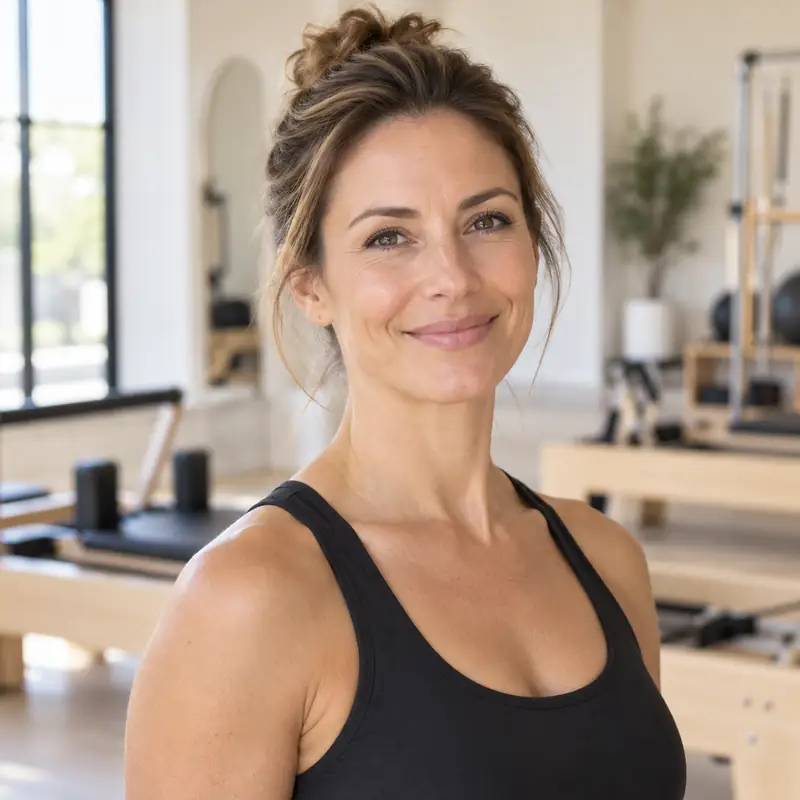
Elise Hartley · Pilates instructor · mat & reformer since 2017
Elise teaches mat and reformer Pilates and has worn and compared more than 40 pairs of grip socks on wood floors, reformer carriages and rubber mats since 2017. She writes every guide on this site and checks each product claim against the spec sheet's own data.
Choose your pack
Pick a pack, a style and your colors. It goes straight to your cart.
Your choice: Crew: Black
🔥 Selling fast — limited stock
Price shown before sales tax.
Prices in US dollars.
Complete your order
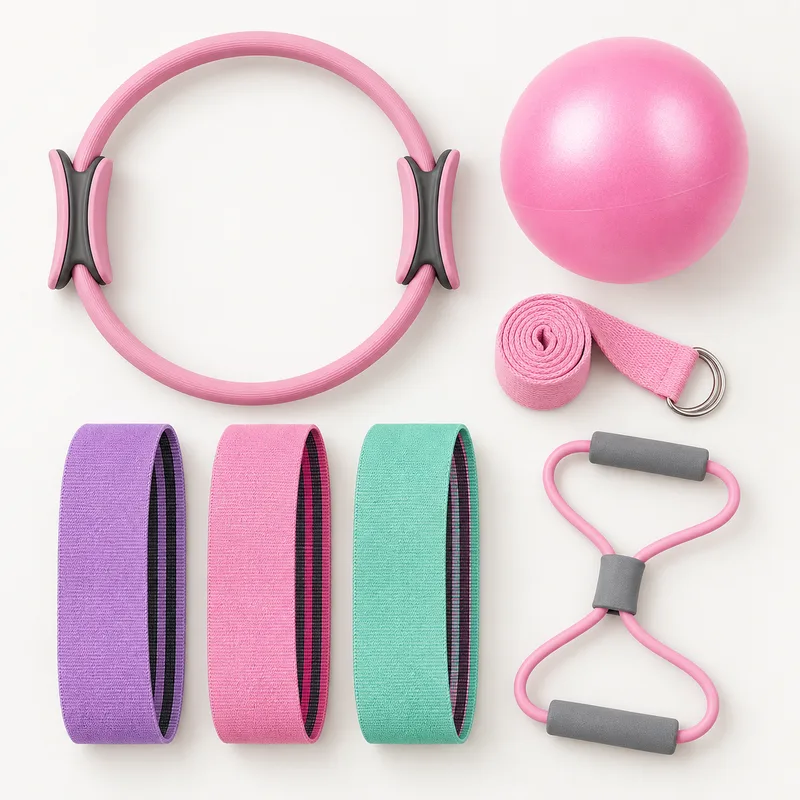
Pilates Kit $39
7 pieces: ring, ball, stretch strap, 3 hip bands, figure-8 expander
Ships in its own parcel, same delivery window.
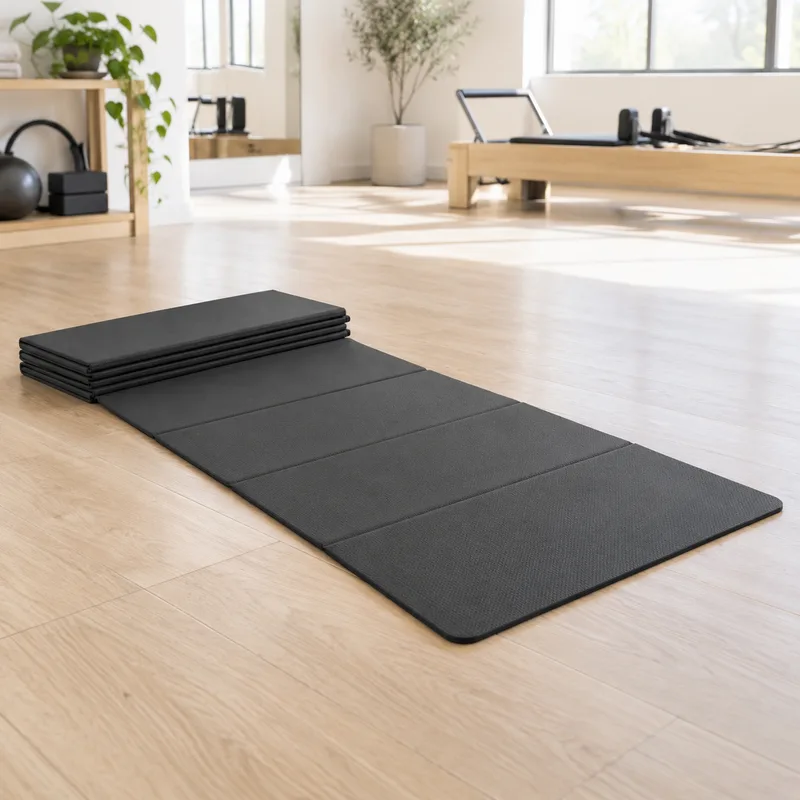
Folding Pilates Mat $29
TPE, 183 × 61 cm, folds flat for travel and small spaces
Ships in its own parcel, same delivery window.