
Ballet Grip Socks: a dance-slipper cut with a non-slip sole
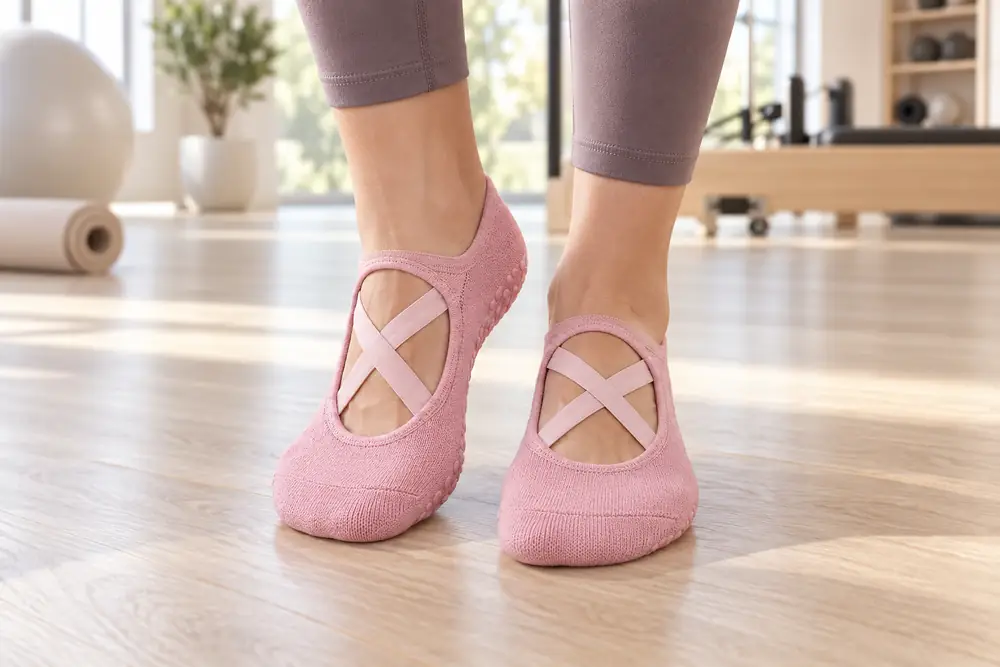
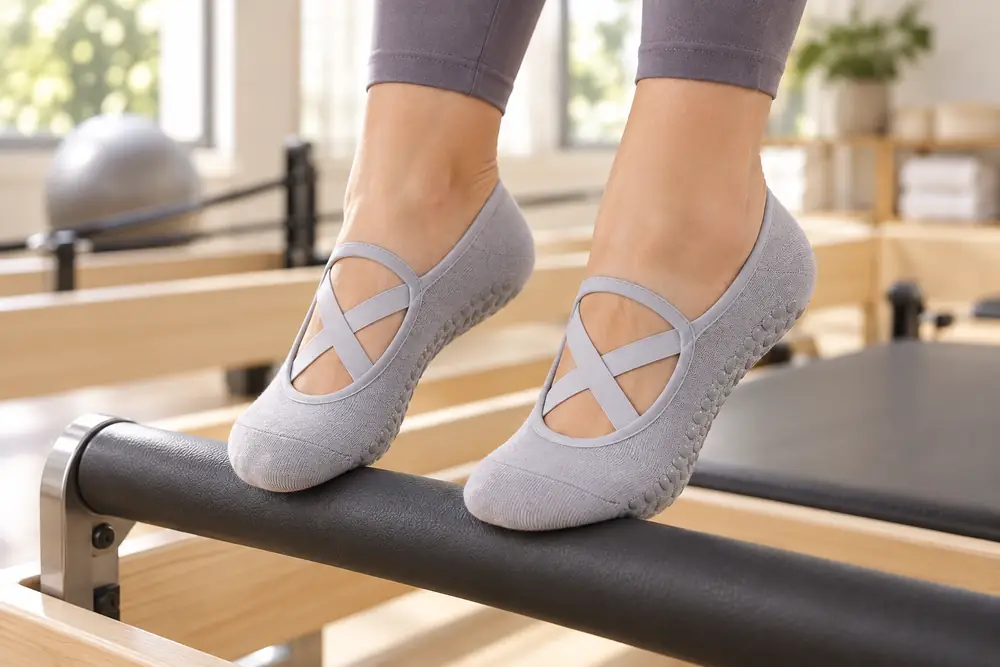
Most grip socks look like a sock. This one looks like a ballet slipper. The knit closes over the toes and cups the heel, the top of the foot stays open, and two straps cross over the instep to keep everything where it belongs when you rise onto the ball of the foot. Under the sole, the same kind of grip you expect from a Pilates sock holds on wood, on a carriage and on a mat. This page explains what the ballet cut changes compared with the crew and ankle styles, how the straps do their work, and which classes it suits best. If you are new to grip socks, start with why studios ask for them, then come back here for the cut.
Choose your ballet pack
Pick a pack, then black, gray or pink for each pair. It goes straight to your cart.
Your choice: Ballet: Black
🔥 Selling fast — limited stock
Price shown before sales tax.
Prices in US dollars.
Complete your order
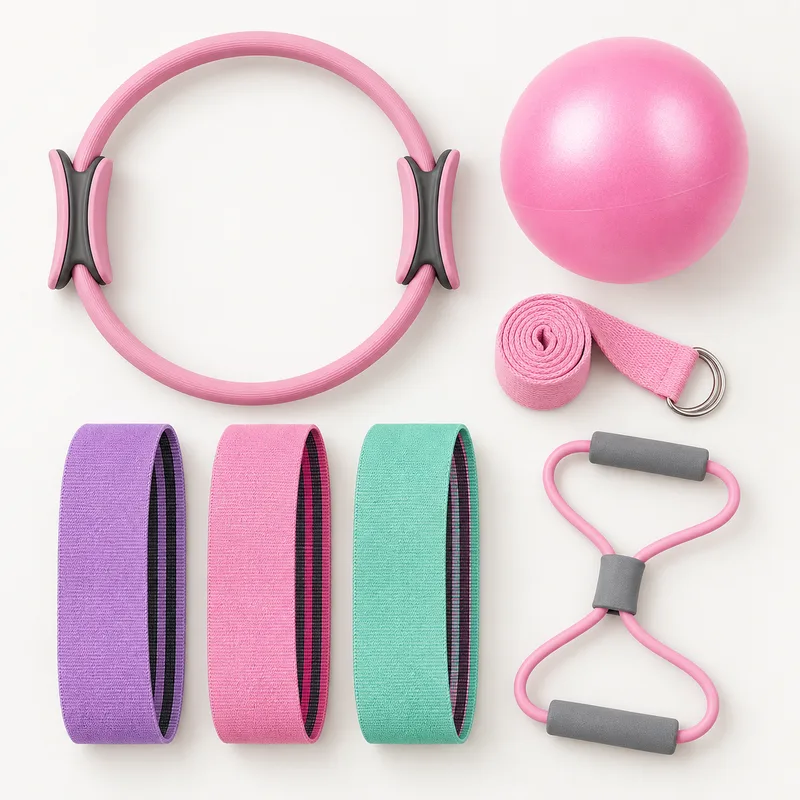
Pilates Kit $39
7 pieces: ring, ball, stretch strap, 3 hip bands, figure-8 expander
Ships in its own parcel, same delivery window.
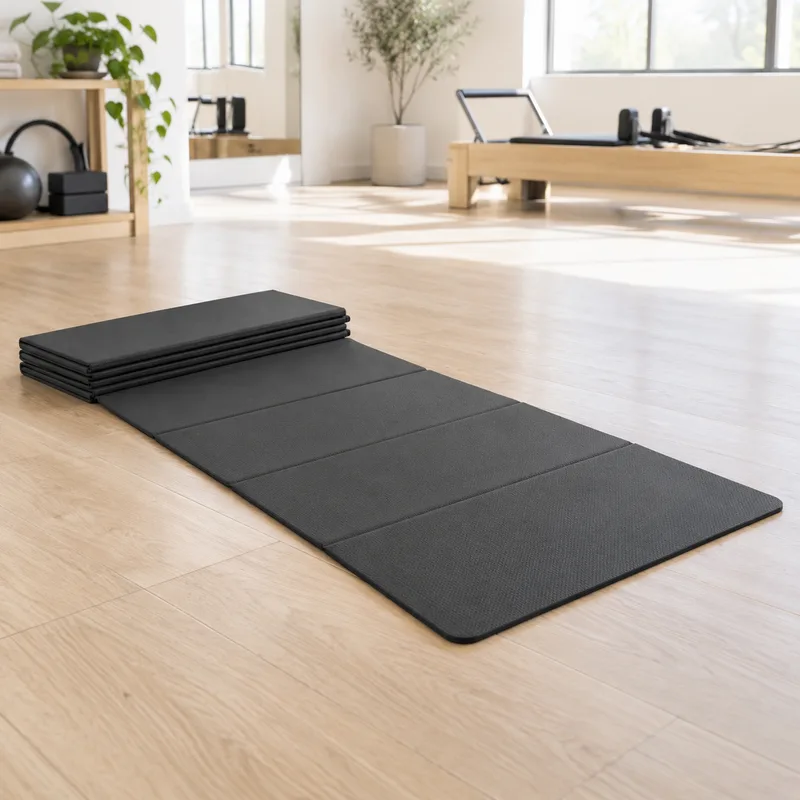
Folding Pilates Mat $29
TPE, 183 × 61 cm, folds flat for travel and small spaces
Ships in its own parcel, same delivery window.
Ballet vs crew vs ankle: which cut for which class
All three PIVELYA styles share the same job, a non-slip sole under the foot, and the same price and pack sizes. What changes is how much of the foot the knit covers and what keeps the sock on. The crew covers the calf and holds with a high cuff. The ankle stops at the ankle bone and holds with a double-loop cuff. The ballet covers the toes and the heel, opens the instep, and holds with two cross straps. The table compares them on what you will notice in class.
| Ballet | Crew | Ankle | |
|---|---|---|---|
| Cut | Dance-slipper shape, open instep, two cross straps | Mid-calf, ribbed cuff, two stripes | Low cut, sits at the ankle bone, ribbed cuff |
| What is covered | Toes, ball of the foot, sole and heel; the top of the foot is open | The whole foot and the lower calf | The whole foot, up to the ankle |
| How it stays on | Two elastic straps crossed over the instep, plus a shaped heel cup | High-elastic cuff; the knit wraps the arch of the foot | Double-loop cuff at the ankle |
| Sole | Non-slip sole, toe to heel | Full-sole honeycomb silicone grip | Silenced non-slip rubber sole, cushioned bottom |
| Fabric | Polyester knit | Cotton and polyester knit | Polyester and cotton knit |
| Colors | Black, Gray, Pink | Black, White, Pink, Blue Gray, Purple | Black, Off-white, Gray, Pink, Purple |
| Pick it for | Barre, mat footwork, a heated reformer, the least fabric on the foot | Cool studios, full coverage up the calf | Everyday classes, a low profile, a padded step |
If your week is mostly reformer with a lot of work in the foot loops, the reformer socks page compares the three cuts on the carriage. If your only question is grip, the non-slip socks page explains the sole on all three. If you buy for a studio, the studio page covers mixed packs. If your week is barre, mat and a warm room, stay here: the ballet pair is the one to order.
What makes it a ballet cut
A ballet slipper covers the toes and the heel, leaves the top of the foot open, and relies on an elastic across the instep to stay on. The PIVELYA ballet grip sock follows the same pattern in knit and adds a non-slip sole. Three parts do the work, and each one is worth a paragraph.
Covered toes and a covered heel
The front of the sock closes over the toes like the toe box of a slipper. The back cups the heel. Between the two, the sole runs the full length of the foot. Your toes sit inside the knit, side by side, exactly as they do in a crew or an ankle sock, and the grip sits under them. What the ballet cut removes is the fabric on top of the foot, not the fabric under it or around the toes. On a cold studio floor, that matters: the part of the foot that touches the floor is the part that stays covered.
An open instep
From the base of the toes to the front of the ankle, the top of the foot is uncovered. That is the part of the foot that bends the most when you point and flex, and the part that gets warm first inside a closed sock. With the instep open, the knit never bunches over the arch during a long footwork series, and air reaches the top of the foot in a heated room. It is also the reason the ballet style carries less fabric than the ankle style.
Two cross straps
Two elastic bands leave the edge of the sole on either side of the foot, cross over the instep and anchor on the opposite side, the way ribbons cross on a pointe shoe. They are the reason the sock stays on without a cuff. Point the foot and the straps tighten across the instep. Flex and they relax. Because the straps carry the sock, the toe box and the heel cup can stay soft instead of gripping the skin.
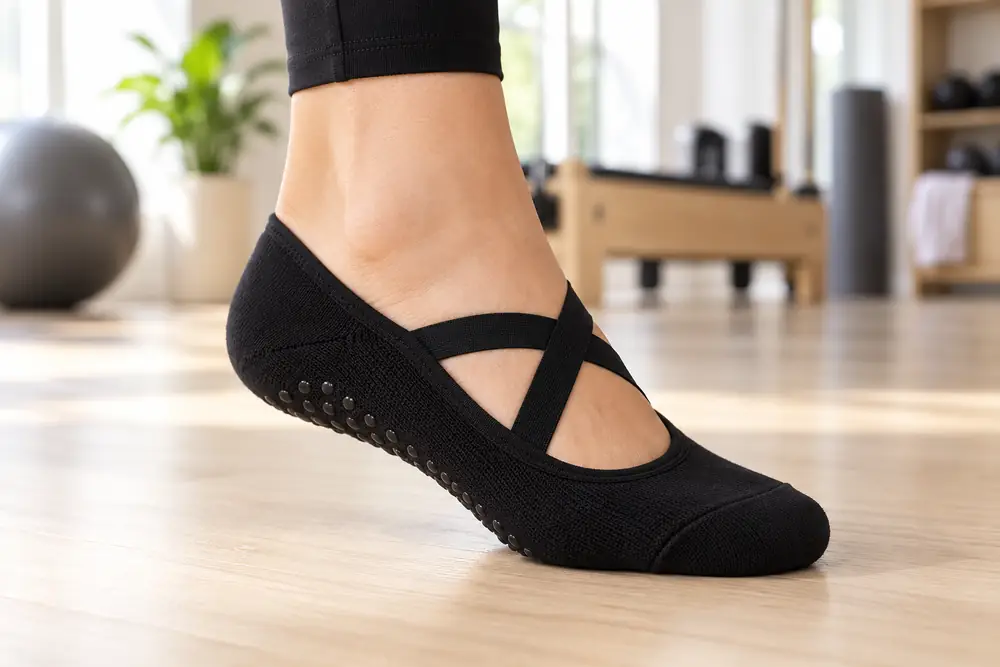
How the straps on ballet grip socks hold through a relevé
Here is what happens when you rise onto the ball of the foot in a closed sock. The heel lifts, the knit around the heel loosens, and a loose heel is what lets a sock creep forward over the course of a class. In the ballet cut, the two straps run over the instep and pull the heel cup toward the front of the sock as the foot lengthens. The heel stays seated. On the way down, the straps slacken and the sock settles back without a tug. That is the whole design: a sole that grips the floor, a heel that stays seated, and no loose fabric over the arch to twist. The sock stays put; it does not slide; it feels snug across the instep and soft everywhere else.
Putting them on so the straps sit right
- Pull the toe box on first and seat the toes at the end of the sock, then pull the heel cup up over the heel.
- Lift each strap and lay it flat across the instep. The two should cross at the highest point of the arch, not down near the toes.
- Stand, rise onto the ball of the foot once, lower. If the heel stays seated and both straps lie flat, you are set. If a strap has rolled into a cord, untwist it flat before class; a rolled strap is the one thing that makes the sock feel tight.
Where ballet grip socks earn their place: barre, mat and a heated reformer
Three situations where I reach for the ballet pair over the other two.
Barre
Barre is relevés, pliés and small pulses on a smooth floor, and the foot spends most of the class on its ball. Grip under the ball of the foot is the first thing you need. A sock that stays on through fifty relevés is the second. The ballet cut gives both, and it looks the part at the barre. The barre socks article goes through the floor types you will meet and what the sole does on each.
year-over-year growth in barre bookings worldwide in 2025, on the ClassPass network
— ClassPass 2025 Look Back Report, 2025
Mat classes
Mat Pilates is footwork on the back, roll-ups pushing through the heels, single-leg circles with a pointed foot. The foot points and flexes for an hour. A closed sock with a cuff rides and needs pulling up. The ballet cut has no cuff to ride, and the straps take the pointing and flexing without shifting the sole. Our mat Pilates socks guide lists the exercises where the sole matters and the ones where it does not.
year-over-year growth in mat Pilates bookings in 2025, the fastest of the top three Pilates formats on ClassPass
— ClassPass 2025 Look Back Report, 2025
Heated reformer
On a heated reformer the carriage is smooth and the room is warm. The sole needs to hold on the carriage and on the foot bar; the foot needs air. The open instep takes care of the heat, and the straps keep the sock from twisting when you push out from the bar through the heels. For a reformer day built around the foot loops, the crew gives more coverage; for footwork, jumpboard and a warm room, the ballet pair is the lighter choice.
year-over-year growth in reformer Pilates bookings in 2025, the most booked Pilates format on ClassPass
— ClassPass 2025 Look Back Report, 2025
More people in barre, mat and reformer classes means more feet on shared floors and carriages, and more studios asking for a grip sock at the door. The ballet style meets that rule with the least fabric of the three.
Colors, size and care
The ballet style comes in three colors: black, gray, pink. A pack of 3 or 6 pairs mixes them freely, one color per pair, all in the ballet style. Black hides floor dust. Gray and pink show off the cross straps.
Size: one size. The spec sheet gives 8.3 in long by 3.1 in wide (21 × 8 cm). Because the straps take up the difference across the instep and the knit stretches, the sole sits under the heel and the ball of the foot without a fixed cuff position to get right.
Care, as we recommend it: turn the sock inside out, machine wash cold with the rest of the studio bag, skip the dryer and let it air dry sole up with the straps laid flat. Heat is what ages a grip sole and tires an elastic, so keeping the sock away from the dryer keeps both the grip and the straps longer. The full routine is in how to wash Pilates socks.
I keep the ballet pair for barre days and for any studio that turns the heat up. The straps are the part I notice: through a full relevé series the heel never moves, and there is no cuff to pull up between exercises. On a reformer day with a lot of work in the foot loops I switch to crew, and back to ballet for footwork. Same non-slip job, a different amount of sock.Elise Hartley, Pilates instructor, mat and reformer since 2017
Buyers rate the range 4.9 / 5 across 1410 verified ratings; the ballet comments are grouped on the reviews page. The criteria we use to judge a grip sock, from the grip pattern to the cuff, the straps and the seam, are on how we test.
Elise Hartley · Pilates instructor · mat & reformer since 2017
Elise teaches mat and reformer Pilates and has worn and compared more than 40 pairs of grip socks on wood floors, reformer carriages and rubber mats since 2017. She writes every guide on this site and checks each product claim against the spec sheet's own data.
Ballet grip socks: your questions
What are ballet grip socks?
Ballet grip socks are Pilates socks cut like a dance slipper. The toes and the heel are covered, the top of the foot is open, and two elastic straps cross over the instep to hold the sock on. A non-slip sole runs under the whole foot, so they meet the grip-sock rule at barre, mat and reformer studios. PIVELYA sells the ballet style in black, gray and pink, one size, in packs of 1, 3 or 6 pairs at the same price as the crew and ankle styles.
Are these toeless?
No. The toes are covered; the open part is the top of the foot, held by two cross straps. Picture a ballet slipper: a closed toe box at the front, a closed cup at the heel, and an open instep between the two. You keep a covered toe and a covered heel, and you lose the fabric over the arch that a closed sock carries. Under the foot, the non-slip sole runs the full length, from the toes to the heel.
What is the difference between ballet socks and grip socks?
A ballet sock, in the dance sense, is a thin sock worn inside a ballet shoe, with no grip on the sole. A grip sock has a non-slip sole and is made to hold on a bare floor, a mat or a reformer carriage, with no shoe at all. A ballet grip sock combines the two: the shape of a ballet slipper, cut in knit, with a non-slip sole under it. You wear it on its own, in class, the way you would wear any other Pilates sock.
Do you need socks for barre?
Most barre studios ask for grip socks, and many require them. The floor at the barre is smooth wood or vinyl, you spend a lot of the class on the ball of the foot in relevé, and a sole that holds keeps the foot from sliding when you sink into a plié. The ballet cut is the one to pick for barre: the sole grips, the straps keep the sock on through the relevés, and there is no cuff to pull up between sets. Check the studio rule before your first class; a grip sock covers every version of it.