
· Elise Hartley
Yoga Socks vs Pilates Socks: One Sock, Two Rooms
The question comes up in every studio lobby and in every search bar: are yoga socks and Pilates socks the same? I teach both formats, and I answer it the same way every time. Turn the sock over. If the sole carries a silicone or rubber grip, it is a grip sock, whatever the label says. The word in front of the word sock tells you which class the maker had in mind, not how the sock is built. This guide goes through what each class asks of your feet, why one sock covers both, and which of the three PIVELYA styles fits the practice you actually do. If you came here for a pair rather than the explanation, the yoga socks page carries the three styles and the pack prices.
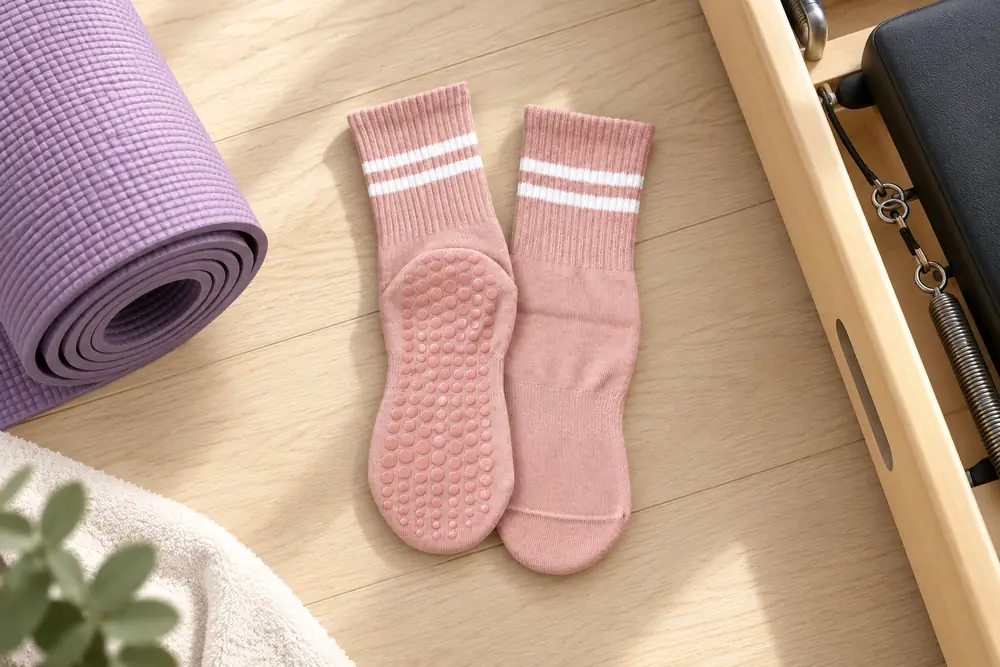
Same sock, two names: why the yoga socks vs Pilates socks question exists
Sock makers name a grip sock after the class it sells to. The same knit sock with the same non-slip sole is sold as a yoga sock, a Pilates sock, a barre sock or simply a grip sock, depending on the shelf it sits on. So here is the sentence to keep: yoga socks and Pilates socks are one object with two names. The difference sits in the class, not in the sock.
That is why this site calls them Pilates grip socks. Pilates is the class where the sock is written into the rules, and it is the class most buyers have in mind when they search. The same pairs go to yoga, and verified buyers say so in their own words: great for yoga or Pilates classes, they don't slip, they fit well. You can read them on our reviews page. If you want the construction explained from the sole up, start with what Pilates socks are. What follows here is the part that does change: the room.
What a yoga class asks of your feet
Yoga is a barefoot practice by tradition. A rubber or cork mat gives a dry foot plenty to hold, and the standing poses ask the toes to spread and press into the mat. Instructors cue the foot constantly: lift the arches, spread the toes, root down through the big toe. A closed sock between the foot and the mat gets in the way of those cues, which is why yoga socks are so often open at the toes or cut low.
Grip enters the picture when the mat stops behaving. Four situations do it. A heated class makes the feet sweat, and a damp foot skates on a mat that held perfectly ten minutes earlier. A cold studio in winter sends people to their bag for a sock, and a plain sock slides on the mat. A studio that supplies shared mats raises the hygiene question, and a sock answers it. And any standing pose that steps off the mat onto hardwood puts skin on a polished floor. In each case the sock does the same thing: it keeps the foot where you put it, on a surface that has become slippery.
Yoga is not a side room in this picture. On ClassPass it was the second most booked workout in the world in 2025, right behind Pilates.
year-over-year growth in yoga bookings worldwide in 2025, the second most booked workout on the platform after Pilates
— ClassPass 2025 Look Back Report, 2025
What a Pilates class asks of your feet
Reformer: a carriage that moves, a footbar, and straps
A reformer class puts the foot on three surfaces in one hour, and none of them is a mat. The carriage is upholstered in smooth vinyl and moves under you. The footbar is a padded bar that takes heels, arches and toes through the footwork series. The straps loop around the feet for leg circles and pull against the top of the foot. On every one of these surfaces, a bare foot or a plain cotton sock slides as soon as it gets warm. A grip sole holds. That is the whole argument, and it is why most reformer studios put grip socks in the dress code: the equipment is shared, the upholstery is smooth, and the sock keeps skin off the carriage and the foot in place on it.
Mat and barre: closer to yoga, with a slippery floor
Mat Pilates looks like yoga from the door: a mat, a floor, no machine. The foot works differently, though. Pilates keeps the feet pointed or flexed through most of the repertoire, and the standing work at the barre puts the ball of the foot on polished hardwood in relevé. Grip matters at the barre far more than on the mat, which is why barre studios tend to adopt the reformer sock rule. On a mat at home the sock is your choice; on a barre floor it earns its place within the first plié. Our page on non-slip Pilates socks explains what the silicone pattern does on each of those surfaces, and our guide to sticky socks for Pilates covers what the word sticky means on a sole.
Both Pilates rooms are getting busier, and the mat room is growing faster than the reformer room.
year-over-year growth in Reformer Pilates bookings worldwide in 2025, the format that puts the foot on a moving carriage
— ClassPass 2025 Look Back Report, 2025
year-over-year growth in Mat Pilates bookings worldwide in 2025, the Pilates format closest to a yoga class in what the foot touches
— ClassPass 2025 Look Back Report, 2025
Those numbers explain the traffic in studio lobbies. More feet on the carriage every year means the sock rule gets applied more strictly, not less, and the people arriving from a yoga class next door are asking the same question you are.
Yoga socks vs Pilates socks: what changes, criterion by criterion
This is the table I draw on the whiteboard when a new student asks whether her yoga socks will do for the reformer. Read down each column and you will see that the sock is the same in every row but the last, and the last row is a preference, not a rule.
| Criterion | Yoga | Pilates |
|---|---|---|
| Surface under the foot | A rubber or cork mat, sometimes the hardwood beside it | A vinyl reformer carriage, a padded footbar, straps, and a mat for floor work |
| Grip you need | Light on a dry mat; full when the mat is damp in a heated class or the floor is polished | Full, from the heel to the toe line: the carriage moves and the footbar is smooth |
| Studio requirement | Rarely required; barefoot is the tradition, and heated studios recommend grip | Required in most reformer, tower and chair studios; usual at the barre; optional on a mat |
| What the toes do | Spread wide and press into the mat in standing poses | Point and flex on the footbar; sit under a strap in leg work |
| Room temperature | Heated flow or a cool restorative room, so the foot is often damp or cold | Usually room temperature; some heated reformer formats |
| Cut I recommend | Ballet for the least fabric on the foot; crew for a cool room; ankle for a heated class | Ankle or crew for the carriage and the straps; ballet for the chair pedal and mat work |
Read the last row twice. The cut is the only line where yoga and Pilates pull in different directions, and every cut in that row carries a grip sole. Any of the three holds in either room. The choice is about how much sock you want on your foot, and how much of the floor you want to feel.
Why the same sock serves both classes
A grip sole works by contact. Silicone or rubber pressed against a smooth surface holds where fabric or damp skin slides, and the surface does not care which class you booked. A damp yoga mat and a vinyl reformer carriage ask the sole for the same thing.
What separates a good grip sock from a poor one is also the same in both rooms. First, coverage: grip that runs from the heel to the toe line, so the foot holds when the weight sits on the heel and when it rolls onto the toes. Second, the cuff or the straps: a sock that creeps down takes its sole with it, and the foot then slides on the sock. Third, the knit: thin enough to feel the mat or the footbar, dense enough to keep its shape over the heel. The three PIVELYA styles are built on those three points, each with its own sole construction and cut, which is why one range covers yoga, Pilates and barre without a separate sock for each.
How to choose the style for your practice
All three styles come in one size and in packs of one, three or six pairs, one style per pack with any mix of that style's colors. The cut is the whole decision, so pick it by what your feet do in the class you take most.
Ballet: the least fabric, with straps that hold
Pick the Ballet when the class asks the foot to point and flex: standing yoga poses, the pedal of a Pilates chair, mat work where you want the least fabric on the foot. The toes and the heel are covered, the top of the foot stays open, two straps cross over the instep to keep the non-slip sole seated under the ball of the foot, and the polyester knit stays light. The spec sheet's dimensions are 8.3 in (21 cm) long by 3.1 in (8 cm) wide, laid flat. Three colors by the pair: black, gray and pink. The ballet grip socks page shows it on the foot.
Crew: for warmth and coverage
Pick the Crew for a cool studio, a slow class, or a reformer strap. It reaches mid-calf with a ribbed, high-elasticity cuff and two stripes, the knit wraps the arch of the foot, and a honeycomb silicone grip covers the full sole. Cotton and polyester knit. It is the pair for restorative yoga in winter, for footwork under a strap, and for anyone who wants the ankle covered on a cold floor. Five colors by the pair: black, white, pink, blue gray and purple.
Ankle: for a low profile
Pick the Ankle when you want the sock to disappear. It stops at the ankle bone under leggings, with a double-loop ribbed cuff, a cushioned bottom, and a toe that is hand sewn to sit flat on the foot surface. The spec sheet describes the rubber sole as silenced and non-slip and the knit as breathable, which suits a heated class in either discipline. Polyester and cotton knit. Five colors by the pair: black, off-white, gray, pink and purple.
| Style | Where it shines in yoga | Where it shines in Pilates |
|---|---|---|
| Ballet | Standing poses, heated flow, any class where you want less sock on the foot | Chair pedal, mat work, footwork where the straps keep the sock on a pointed foot |
| Crew | Restorative and yin, a cool room, a winter practice | Reformer straps, tower, a cold studio floor |
| Ankle | Heated classes, shared studio mats, a low profile under leggings | Reformer, barre, heated reformer, the pair most studios mean by grip socks |
Questions people ask about yoga socks vs Pilates socks
Are yoga socks and Pilates socks the same?
Yes. Both are a knit sock with a non-slip sole, and the name follows the class the maker had in mind, not the construction. A yoga sock is more often open at the toes or low cut because yoga keeps the toes on the mat. A Pilates sock is more often closed, with a cuff that stays up under a reformer strap. Turn any sock over: if the sole carries grip from heel to toe, it works in both rooms.
Can I use yoga socks for Pilates?
Yes, as long as the sole has grip that reaches the heel and the toe line and the sock stays in place under a strap. A ballet pair with cross straps over the instep holds on a footbar and a chair pedal. If your studio asks for a full sock on the reformer, take the ankle or the crew cut instead of the ballet.
Can I do Pilates in regular socks?
On a mat at home, yes. On a reformer, a plain cotton sock slides on the vinyl carriage and on the footbar as soon as the foot warms up, and most studios will ask you to change into grip socks before class. The grip sole is what turns a sock into a Pilates sock.
Is it better to do Pilates barefoot or wear socks?
It depends on the surface. On a shared reformer, a barre floor or a damp mat, a grip sole holds where bare skin slides, and the studio usually decides for you. On your own dry mat at home, barefoot works, and many people still wear the sock for warmth and for the hold on the hardwood beside the mat.
Why do Pilates socks lose their grip?
Heat and fabric softener. A hot wash or a hot dryer hardens silicone and rubber, and softener leaves a film on the dots that makes them slick. Our recommendation is a cold wash, inside out, no softener, air dried flat. A pair that dries fully between classes keeps its grip far longer.
If the last question is the one that brought you here, our guide on how to wash Pilates socks sets out the full routine, pair rotation included. And if your studio has not told you yet whether socks are on the list, do you need grip socks for Pilates goes through it class by class.
One sock, two rooms: what to pack
If your week holds a yoga class and a reformer class, you do not need two kinds of sock. You need one grip sock in the cut that suits the class you take most, and a second pair so one can dry while the other rides in your bag. A three-pair pack of one style covers a week of mixed classes; a six-pair pack covers a daily practice or two people in one household. Every pack of PIVELYA Pilates grip socks comes with free shipping and a 30-day money-back guarantee, in three styles and thirteen colors. The three styles are below.
Elise Hartley · Pilates instructor · mat & reformer since 2017
Elise teaches mat and reformer Pilates and has worn and compared more than 40 pairs of grip socks on wood floors, reformer carriages and rubber mats since 2017. She writes every guide on this site and checks each product claim against the spec sheet's own data.
Choose your pack
Pick a pack, a style and your colors. It goes straight to your cart.
Your choice: Crew: Black
🔥 Selling fast — limited stock
Price shown before sales tax.
Prices in US dollars.
Complete your order
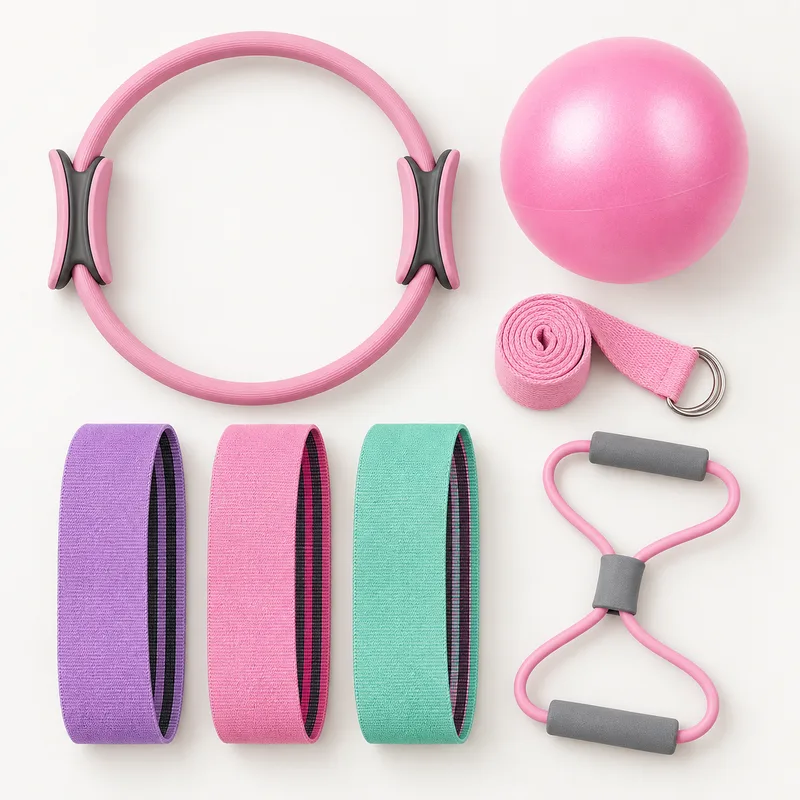
Pilates Kit $39
7 pieces: ring, ball, stretch strap, 3 hip bands, figure-8 expander
Ships in its own parcel, same delivery window.
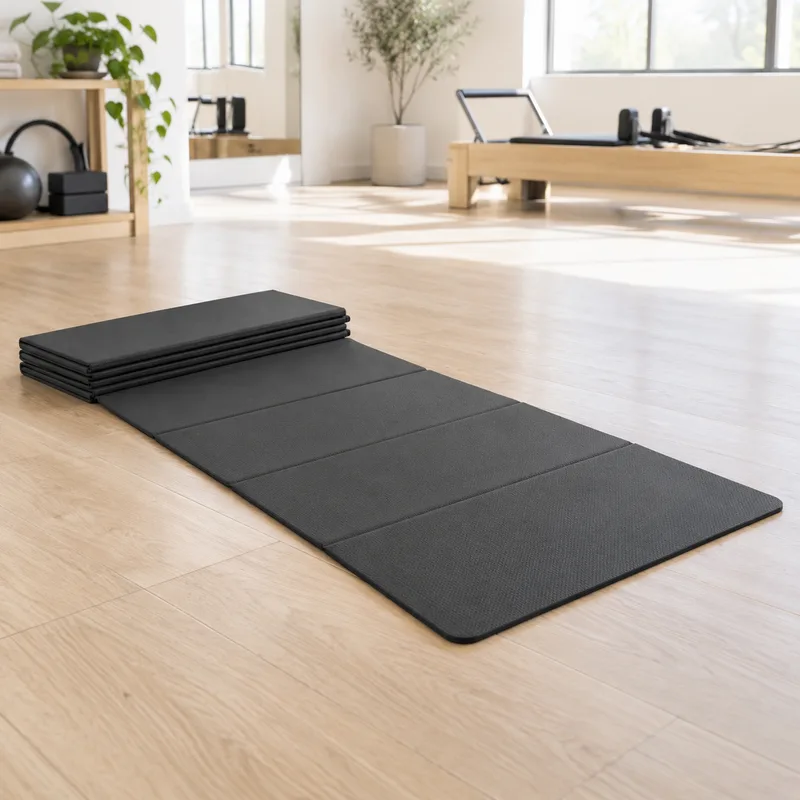
Folding Pilates Mat $29
TPE, 183 × 61 cm, folds flat for travel and small spaces
Ships in its own parcel, same delivery window.