
· Elise Hartley
What are Pilates socks? A sock with a grip sole, built for the studio
If you have just booked a first reformer class and the confirmation email says "grip socks required", this guide is the explanation. It covers what the sock is, where it comes from, what the word grip means once your foot is on a smooth surface, the three cuts you will find in a studio basket, and the habits that go with them. I teach mat and reformer, and this is the version I give new students at the door.
What are Pilates socks, grip socks and sticky socks? One object, several names
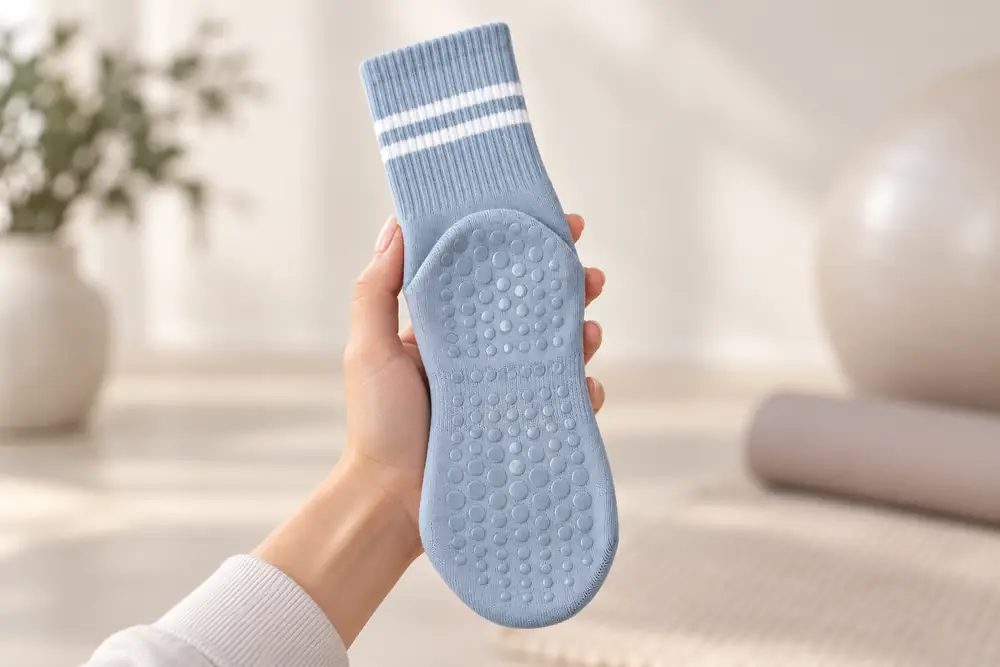
A Pilates sock is a knit sock with a non-slip layer bonded to the sole. That layer is the whole point. It can be a field of silicone dots, a silicone honeycomb that covers the sole from heel to toe, or a thin rubber print. The upper part looks like any sport sock: a ribbed cuff, a heel, a toe. Turn the sock over and you see what makes it a Pilates sock.
The names change with the person speaking. Studios say grip socks. Instructors say sticky socks or grippy socks. Shops say Pilates socks, barre socks or yoga socks. So if you searched for the Pilates socks meaning, or asked what grip socks are, the answer is one line: a sock whose sole holds on a smooth surface. The difference between a yoga sock and a Pilates sock is a matter of cut and use, not of principle. We compare the two in yoga socks vs Pilates socks.
What are Pilates socks for? Shoes off, equipment shared
Pilates is done without shoes. The foot has to feel the footbar of the reformer, spread on the mat, press into the straps and articulate through every exercise. Shoes get in the way of all of that, so nobody wears them. For a long time that simply meant bare feet.
Two things changed as studios opened to the public. First, the equipment became shared. A reformer carriage takes a dozen pairs of feet in a morning, and the straps loop around every ankle that books that hour. Second, the surfaces stayed smooth. Vinyl upholstery and polished wood are easy to clean, and for the same reason they are slippery, especially once the foot is warm. A bare foot slides during footwork, and a plain cotton sock slides even more.
The grip sock answers both problems with one piece of fabric. The knit keeps bare skin off shared upholstery, and the sole keeps the foot where you put it. Studios wrote it into their rules, front desks started keeping a basket of pairs by the register, and the sock became standard. The rule keeps spreading because the rooms keep getting busier.
year-over-year growth in Reformer Pilates bookings worldwide in 2025, the platform's global favorite format
— ClassPass 2025 Look Back Report, 2025
in a row, through 2025, that Pilates was the most booked workout globally on ClassPass
— ClassPass 2025 Look Back Report, 2025
More people on the same carriages means the sock rule matters more each season, not less. If you want the rule by class type, reformer, mat, barre or tower, our guide answers whether you need grip socks for Pilates, situation by situation.
What "grip" means, surface by surface
Grip is not a feeling. It is what the sole does when the foot pushes against a surface. Three surfaces come up in every class, and the sock behaves differently on each of them.
| Surface | Bare foot or plain sock | Grip sole |
|---|---|---|
| Polished wood or laminate (barre floor, studio floor between stations) | Dry skin holds a little. A cotton sock skates as soon as you push into a relevé or a lunge. | The silicone dots or the honeycomb bite into the grain of the floor. The foot stays under the knee in a lunge and on the ball of the foot in a relevé. |
| Rubber or foam mat | A bare foot holds on a dry mat. A thick, soft mat compresses under the heel in a plank and the heel creeps. A cotton sock slides on any mat. | The grip holds the heel in place on foam and keeps the toes planted in a plank or a bridge. |
| Reformer carriage and footbar (vinyl upholstery, padded bar) | Smooth vinyl plus a warm foot equals a skating foot during footwork. A cotton sock is worse than skin here. | The sole holds on the vinyl while the carriage moves under you. On the footbar, the heel and the toes stay where the instructor placed them. |
Notice what grip is not. It is not a stickiness you feel with a finger; a new sock feels barely tacky in the hand. It is what happens under load, when the foot pushes. The non-slip Pilates socks page goes deeper into how the pattern and the coverage of the sole change the hold.
What is a Pilates sock made of? Its anatomy, and what our product sheets say
Every grip sock has the same parts. The table gives the job of each part and what the spec sheet documents for the three PIVELYA styles. Where the sheet says nothing, the cell says so.
| Part of the sock | What it is for | What our product sheets say |
|---|---|---|
| Sole | Holds the foot on wood, mat, carriage and footbar. Coverage matters: a grip that stops at the ball of the foot leaves the heel free to slide. | Crew: full-sole silicone honeycomb. Ankle: rubber sole described as silenced and non-slip, with a cushioned bottom. Ballet: non-slip sole. |
| Cuff or edge | Keeps the sock in place under a strap and stops it from rolling down or twisting during a roll-over. | Crew: high-elastic ribbed cuff, and a knit that wraps the arch of the foot. Ankle: ribbed edge with a double-loop design. Ballet: two crossed straps over the instep instead of a cuff. |
| Cut | Decides how much of the foot and the leg is covered, and where the sock ends. | Crew: mid-calf, two stripes. Ankle: low cut, stops at the ankle, two stripes. Ballet: slipper cut, toes and heel covered, open instep. |
| Fabric | Softness, breathability and how the sock behaves in the wash. | Crew: cotton and polyester, knit. Ankle: polyester and cotton, knit, described as breathable. Ballet: polyester, knit. |
| Toe seam | A flat seam keeps the toes comfortable when they press into the footbar. | Ankle: hand-sewn toe with a flat fit on the foot surface. Crew and ballet: not documented on the sheet. |
| Size | How the sock meets the foot. | One size on all three styles. Ballet: 8.3 in (21 cm) long by 3.1 in (8 cm) wide, according to the spec sheet. |
The pattern of a sole is easy to see. The coverage is what to check. Turn the sock over and look for grip under the heel and under the toes, not only under the ball of the foot. That single check separates a sock that holds in footwork from one that holds only when you stand still.
The three cuts: crew, ankle, ballet
The cut is the visible difference between grip socks, and the one most people choose on. Grip is on the sole of all three styles. The cut changes what the sock does above the sole.
Crew: mid-calf, ribbed cuff, two stripes
The crew reaches mid-calf. Its cuff is ribbed and high-elastic, and the knit wraps the arch of the foot so the sock does not shift inside a reformer strap. The sole carries a silicone honeycomb over the whole foot. The knit is cotton and polyester. It is the cut for cold studios, for anyone who wants nothing riding down during a long strap series, and for people who like a stripe above the ankle. Five colors: black, white, pink, blue gray and purple.
Ankle: low cut, double-loop edge, flat toe seam
The ankle sock stops at the ankle bone with a ribbed double-loop edge. Its sole is rubber, described on the sheet as silenced and non-slip, with a cushioned bottom, and the toe is hand-sewn so the seam lies flat on the foot surface. The knit is polyester and cotton and it breathes. It is the cut for warm rooms, barre floors and anyone who wants the least fabric on the leg. Five colors: black, off-white, gray, pink and purple.
Ballet: slipper cut, crossed straps, open instep
The ballet sock covers the sole, the heel and the toes, leaves the top of the foot open and holds on the foot with two crossed straps over the instep. There is no cuff. The sole is non-slip and the knit is polyester. It is the cut for people who want the least fabric on the foot and still have grip under the ball of the foot and the heel: mat work, barre, and studios that allow it on the reformer. Three colors: black, gray and pink. The page on ballet grip socks covers how the straps sit on the instep.
What grip socks are for in a studio: the etiquette
So what are grip socks for, beyond the sole? They are for the room, and the room has habits. Learning them before the first class saves an awkward moment at the desk.
Read the policy in the booking email. If it mentions socks, the studio will check at the door. Most reformer, tower and chair studios do; many barre studios do; mat studios vary.
Bring your own pair. The basket at the front desk is a fallback, the choice in it is small, and buying five minutes before class is the expensive way to learn the rule.
Put them on inside the studio. Grit from the sidewalk wears the silicone, and a sole that got wet on the way in holds nothing until it dries. Shoes come off at the door, socks go on at the mat.
Grip side down, one pair per class. A sock that was damp after the morning class holds less in the evening one. A rotation of three pairs covers a normal week with one pair in the wash.
Keep the grip sole out of your shoes. Inside a sneaker the dots add nothing and wear against the insole. Grip pairs are for the studio and the mat; regular socks go in the shoes.
Washing is its own topic. Our guide on how to wash Pilates socks gives the routine we recommend so the sole stays sticky over months of classes.
One size, and the ballet measurements
All three styles come in one size. The knit stretches to the foot, and the cuff or the straps hold it in place. The one style with published measurements is the ballet: the spec sheet gives 8.3 inches (21 cm) long and 3.1 inches (8 cm) wide, laid flat. Before ordering, stand on a sheet of paper, mark the heel and the longest toe, and compare that length with the 8.3 inches. A flat measurement tells you more than a shoe size, because the knit stretches and a shoe size describes a rigid sole.
Verified buyers describe the fit with the same words across all three styles: the socks stay put, they do not slide, and they feel snug and soft. Their words, by style, are on the reviews page.
Questions people ask about Pilates socks
Can you wear normal socks to Pilates?
You can walk in wearing them, but on a reformer carriage or a barre floor a normal sock slides more than a bare foot: cotton on vinyl or on polished wood has nothing to hold with. Most reformer studios ask for a grip sole for that reason and will point you to the basket at the desk if you arrive in regular socks. On your own mat at home, wear what you like.
Are yoga and Pilates socks the same?
Same principle: a knit sock with a grip sole. The use differs. Yoga is mostly done barefoot on a mat, so a yoga sock is often open at the toes and light. Pilates puts the foot on a footbar, in straps and on a moving carriage, so a Pilates sock is judged on sole coverage and on a cuff that stays put. Our comparison of yoga socks and Pilates socks lays out the differences.
What's the point of Pilates socks?
Two things. The sole holds the foot on a smooth surface: wood, mat, carriage, footbar. The knit keeps bare skin off equipment that a dozen other people use the same day. That is what Pilates socks are good for, and it is why studios write them into their rules.
Is it better to do Pilates barefoot or wear socks?
It depends on the surface. On a shared carriage, a barre floor or a damp mat, a grip sole holds where skin slides, and the studio usually decides for you. On your own dry rubber mat at home, barefoot works, and many instructors like the direct contact with the mat. The sock is the answer to a smooth or shared surface, not a substitute for the mat.
Where to go next
You now know what a Pilates sock is: a knit sport sock with a non-slip sole, in three cuts, made for rooms where the foot works without a shoe on surfaces other people use. The next question is usually which cut. Crew for straps and cold rooms, ankle for warm rooms and barre, ballet for the least fabric on the foot. All three PIVELYA Pilates grip socks styles come in one size and in packs of one, three or six pairs, with free shipping and a 30-day money-back guarantee. If your studio runs reformer classes, the page on reformer Pilates socks explains which cut holds best on the carriage.
Elise Hartley · Pilates instructor · mat & reformer since 2017
Elise teaches mat and reformer Pilates and has worn and compared more than 40 pairs of grip socks on wood floors, reformer carriages and rubber mats since 2017. She writes every guide on this site and checks each product claim against the spec sheet's own data.
Choose your pack
Pick a pack, a style and your colors. It goes straight to your cart.
Your choice: Crew: Black
🔥 Selling fast — limited stock
Price shown before sales tax.
Prices in US dollars.
Complete your order
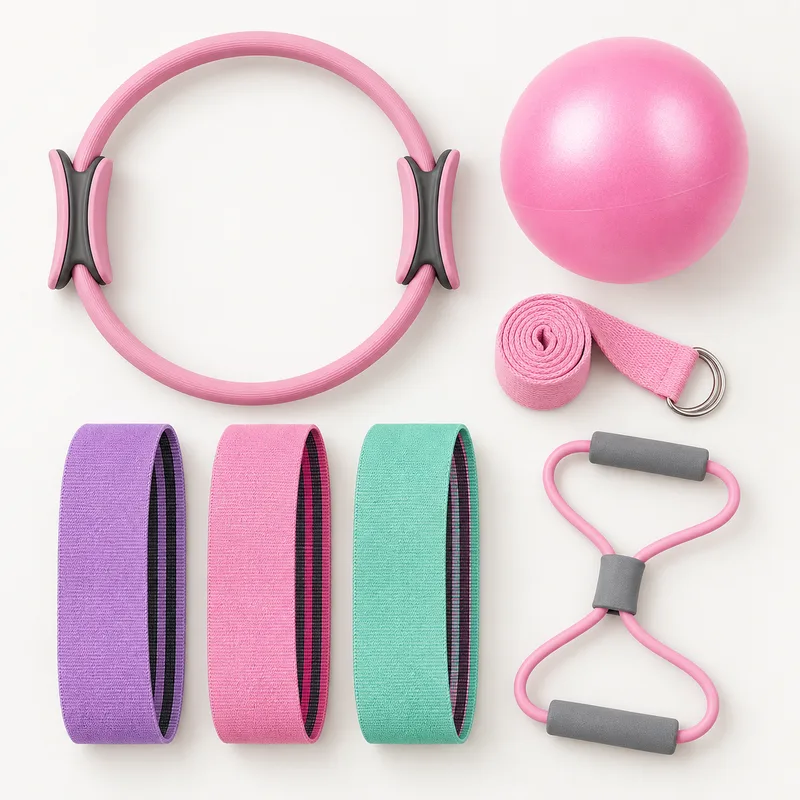
Pilates Kit $39
7 pieces: ring, ball, stretch strap, 3 hip bands, figure-8 expander
Ships in its own parcel, same delivery window.
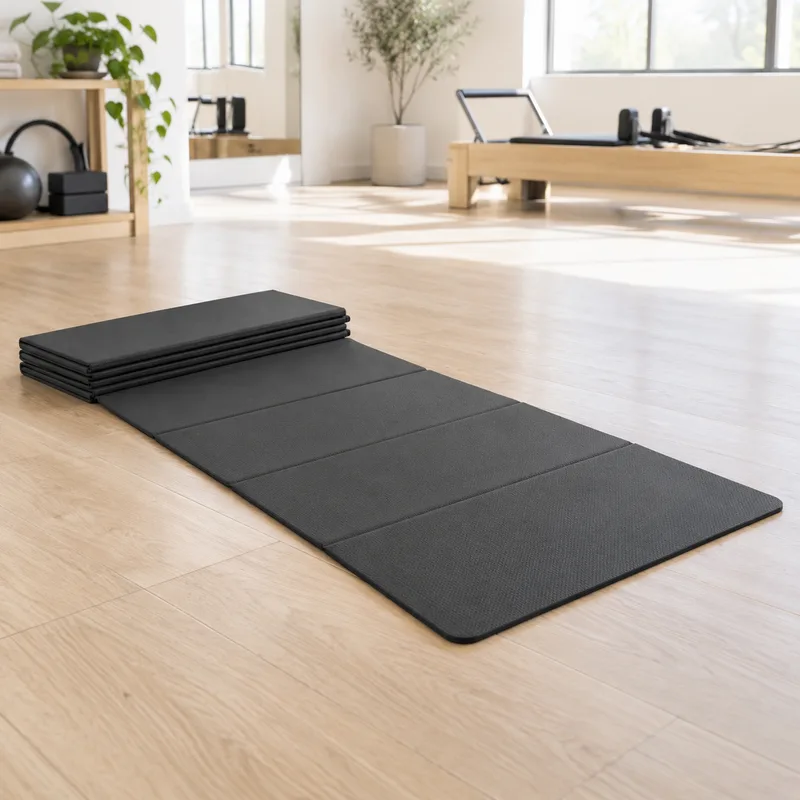
Folding Pilates Mat $29
TPE, 183 × 61 cm, folds flat for travel and small spaces
Ships in its own parcel, same delivery window.