
· Elise Hartley
What Makes the Best Pilates Socks: Grip, Cut, Cuff, Fabric and Care
Search for the best grip socks for Pilates and you get lists of labels. I have worn more than forty pairs in studios since 2017, and the sock that held on a reformer carriage never announced itself by its label. It announced itself by its sole, its cuff and its knit. This guide walks through those criteria in the order I check them, with the three PIVELYA styles as concrete examples, so you can see what each criterion looks like on a real sock.
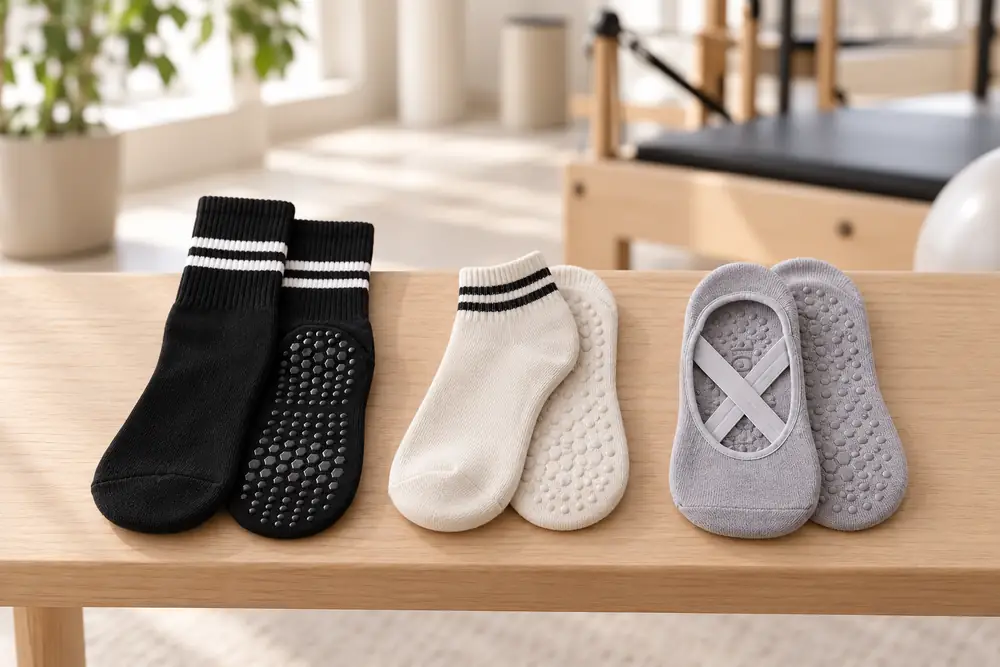
The best Pilates socks start with the sole: grip pattern and coverage
The sole decides whether a sock is a Pilates sock at all. Look at two things: what the grip is made of, and how much of the foot it covers.
Silicone and rubber both hold on wood, on a vinyl mat and on the upholstery of a reformer carriage. What changes from one sock to the next is the pattern. A handful of large dots under the ball of the foot leaves the heel and the toes on plain fabric. A honeycomb, or a dense field of small dots, spreads the contact across the whole sole, so the foot holds when your weight sits on the heel in a footwork series and when it rolls onto the toes in a relevé.
Coverage matters more than most buyers expect, because a knit sock stretches when you put it on. Grip that stops short of the toes on the shelf stops even shorter on the foot. So turn the sock over. If the grip does not reach the toe line and the heel, it will not be there when you need it.
On the three PIVELYA styles, this is what the sole looks like. The Crew carries a honeycomb silicone grip across the full sole. The Ankle uses a rubber sole that the spec sheet describes as silenced and non-slip, over a cushioned bottom. The Ballet has a non-slip sole under a covered toe and an open instep, so the ball of the foot and the heel sit on the grip while two cross straps hold the sock on. Our non-slip Pilates socks page goes deeper into how each sole is built.
Choose the cut for the class you take
Crew, ankle and ballet are the three cuts you will meet, and each answers a different class. The cut changes where the sock ends, how it behaves under a strap, and how much of the floor you feel.
| Class | What the foot does | Cut I reach for |
|---|---|---|
| Reformer | Heels and toes on the footbar, feet in straps, weight on a moving carriage | Crew or ankle: full-sole grip, and a cuff that keeps the sock in place under a strap |
| Mat | Long holds, rolling through the spine, standing work on a thin mat | Ballet when I want the least fabric on the foot; ankle when the floor is cold |
| Barre | Relevés, pliés, small pulses on a smooth floor | Ankle: a low cut that stays clear of the calf, with a rubber sole for the rise |
| Home | Carpet, hardwood, a mat that slides on the floor | Any of the three; a crew keeps the ankle covered on a cold floor |
Crew: mid-calf, two stripes, the sock that stays under a strap
The PIVELYA Crew reaches mid-calf, with a ribbed cuff at the top and two stripes. The cuff is a high-elasticity rib, and the knit wraps the arch of the foot, so the sock keeps its place when a reformer strap runs across the top of the foot. Cotton and polyester knit. Five colors sold by the pair: black, white, pink, blue gray and purple.
Ankle: low cut, double-loop cuff, flat toe seam
The PIVELYA Ankle stops at the ankle bone. Its ribbed cuff uses a double-loop design, the toe is hand sewn so the seam lies flat across the foot surface, and the bottom is cushioned. The spec sheet lists it as breathable. Polyester and cotton knit. Five colors by the pair: black, off-white, gray, pink and purple.
Ballet: covered toes, cross straps over the instep
The PIVELYA Ballet is built like a ballet slipper: the toes and the heel are covered, the top of the foot is open, and two straps cross over the instep to hold the sole in place. Polyester knit. The spec sheet's dimensions are 8.3 in (21 cm) long by 3.1 in (8 cm) wide, laid flat, in one size. Three colors by the pair: black, gray and pink. The ballet grip socks page shows it on the foot.
The cuff decides whether the sock stays put
A grip sock that creeps down inside itself takes the grip with it: the sole moves, and the foot slides on the sole. So the top of the sock deserves as much attention as the bottom.
Look at how the cuff is built. A ribbed cuff that snaps back after you stretch it will hold its place on the leg. A double-loop cuff gives a low-cut sock the hold a crew gets from height. On an open-instep design, straps do the job: they cross the instep and keep the sole seated under the ball of the foot. Then look at the seams. A toe seam that has been sewn flat sits under the toes without a ridge, which you notice on the footbar more than anywhere else.
The words that come back in verified buyer reviews on our reviews page are the ones I would use myself: don't slip, comfortable, snug, soft. A sock that earns those four words has passed the cuff test. Our testing routine explains how each style is worn before it enters the range.
Fabric: what the knit is made of, and how it breathes
Cotton feels soft against the skin and takes in moisture. Polyester holds its shape and gives the knit its stretch and its recovery. Most grip socks blend the two, and the balance shapes the feel: a cotton-forward knit feels softer and denser, a polyester knit feels lighter and springs back harder.
All three PIVELYA styles are knit. The Crew is cotton and polyester. The Ankle is polyester and cotton, with a cushioned bottom, and the spec sheet describes it as breathable. The Ballet is polyester, in an open-instep design that leaves the top of the foot bare, so heat leaves the foot on its own.
A Pilates sock should be thin enough to feel the footbar through the sole and dense enough that the knit does not thin out over the heel after a few weeks. Neither number is printed on a sock, so use your hand: stretch the foot of the sock and see whether the knit stays opaque.
Care: how the grip survives the wash
A sole rarely wears out from class. It wears out in the laundry. Silicone and rubber both dislike heat, and fabric softener leaves a film on the grip that makes it slick.
Our recommendation, and it is our recommendation rather than a care label: wash cold, turn the sock inside out so the grip faces in, skip the softener, and air dry flat. A pair that goes through that routine keeps its grip for far longer than one that goes through a hot dryer every week. The full routine, with how to rotate pairs, is in our guide on how to wash Pilates socks.
Rotation is part of care. A three-pair or six-pair pack of one style, in any mix of colors, lets each pair dry fully between classes, and a pair that dries fully holds its shape and its grip longer.
The checklist for the best Pilates socks: what to look for, and which PIVELYA style meets it
This is the table I would hand a friend before she buys any grip sock. Read down the middle column first, then use the right column to see how each criterion looks on a real product.
| Criterion | What to look for | Which PIVELYA style meets it |
|---|---|---|
| Grip pattern and coverage | Grip that runs from the heel to the toe line, in many small contact points rather than a few big dots | Crew: honeycomb silicone across the full sole. Ankle: rubber sole, silenced and non-slip, on a cushioned bottom. Ballet: non-slip sole under the ball of the foot and the heel |
| Cut | Crew for straps and cold studios, ankle for a low profile at the barre, ballet for the least fabric on the foot | Crew (mid-calf), Ankle (low cut), Ballet (covered toes, open instep with cross straps) |
| Cuff and hold | A ribbed cuff that snaps back, a double band on a low cut, straps on an open-instep design | Crew: high-elasticity ribbed cuff that wraps the arch. Ankle: double-loop cuff. Ballet: cross straps over the instep |
| Seams | A toe seam sewn flat, with no ridge under the toes | Ankle: hand-sewn toe, flat fit on the foot surface |
| Fabric and breathability | A knit blend: cotton for softness, polyester for shape and quick drying | Crew: cotton and polyester knit. Ankle: polyester and cotton knit, breathable. Ballet: polyester knit, open instep |
| Wash and grip life | Cold wash, inside out, no softener, air dry (our recommendation) | All three styles follow the same routine; buy a pack to rotate pairs |
Why the search for the best Pilates socks returns so many lists
Pilates has grown fast, and the grip sock market has grown with it. More people in reformer classes means more feet on a moving carriage, and more studios asking for grip socks at the door.
year-over-year growth in Pilates bookings worldwide, the most-booked workout for the third year in a row
— ClassPass 2025 Look Back Report, 2025
year-over-year growth in Reformer Pilates reservations, the format that puts the foot on a moving carriage
— ClassPass 2025 Look Back Report, 2025
That growth is why a search for the best Pilates socks returns ranked lists of labels. Criteria travel better than lists. A list is out of date by the next season; the sole, the cuff and the knit are the same questions every year, and you can check all five on any sock in under a minute.
One size: what it means before you order
All three PIVELYA styles come in one size. The knit stretches to the foot, and the cuff or the straps hold it in place. For the Ballet, the spec sheet's dimensions are 8.3 in (21 cm) long by 3.1 in (8 cm) wide, laid flat before stretching. Every pack is one style in the colors you choose, one color per pair.
Questions people ask about the best Pilates socks
What kind of socks should I wear for Pilates?
Wear a grip sock: a knit sock with a silicone or rubber grip on the sole. Pick the coverage first (grip that reaches the heel and the toes), then the cut for your class: crew or ankle for reformer work, ballet when you want less fabric on the foot, ankle for barre.
Do you really need grippy socks for Pilates?
Most reformer studios ask for them, because a bare foot or a plain sock slides on the carriage and the footbar. On a mat at home they are optional. Our guide on whether you need grip socks for Pilates goes through the cases class by class.
What is the difference between yoga socks and Pilates socks?
The sole is the same idea: a grip pattern on a knit sock. The difference is in use. Yoga is done mostly barefoot on a mat, so a yoga sock is often open at the toes and light. Pilates puts the foot on a footbar, in straps and on a moving carriage, so a Pilates sock is judged on full-sole coverage and on a cuff that stays put.
If the second question is the one that brought you here, read do you need grip socks for Pilates first: it goes through reformer, mat, barre and home class by class.
Where to go next
Pick the sole first, then the cut, then check the cuff, the knit and the wash routine. Everything on the PIVELYA home page is built around those five criteria: three styles, thirteen colors, and packs of one, three or six pairs. The three styles are below.
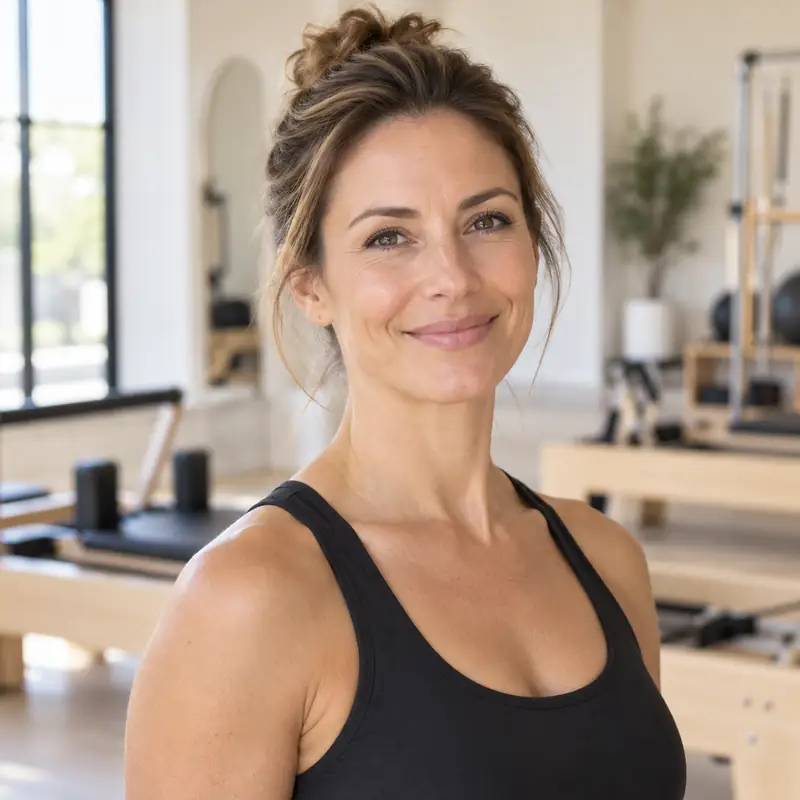
Elise Hartley · Pilates instructor · mat & reformer since 2017
Elise teaches mat and reformer Pilates and has worn and compared more than 40 pairs of grip socks on wood floors, reformer carriages and rubber mats since 2017. She writes every guide on this site and checks each product claim against the spec sheet's own data.
Choose your pack
Pick a pack, a style and your colors. It goes straight to your cart.
Your choice: Crew: Black
🔥 Selling fast — limited stock
Price shown before sales tax.
Prices in US dollars.
Complete your order
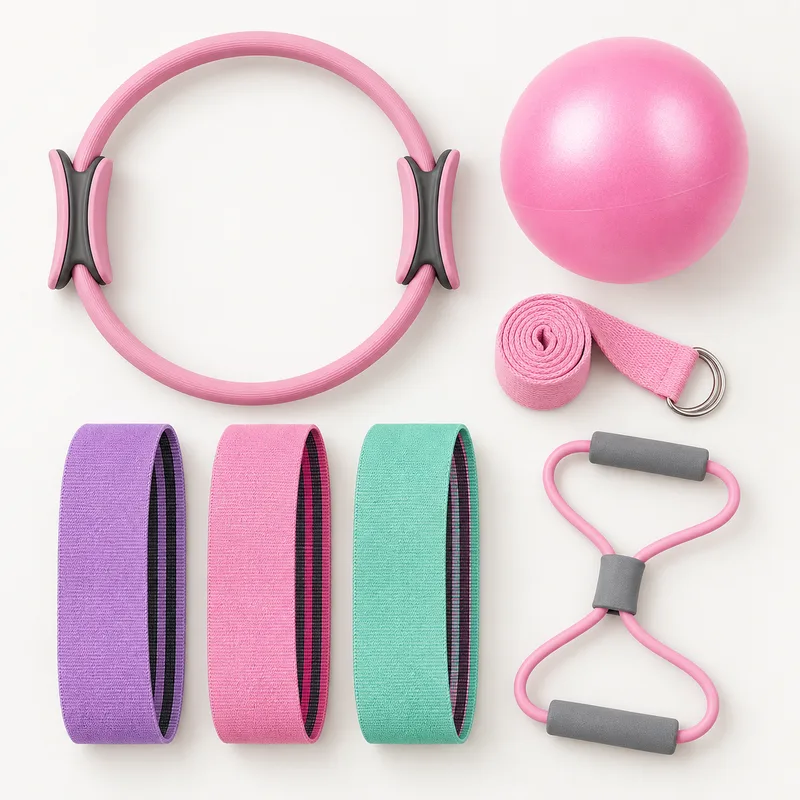
Pilates Kit $39
7 pieces: ring, ball, stretch strap, 3 hip bands, figure-8 expander
Ships in its own parcel, same delivery window.
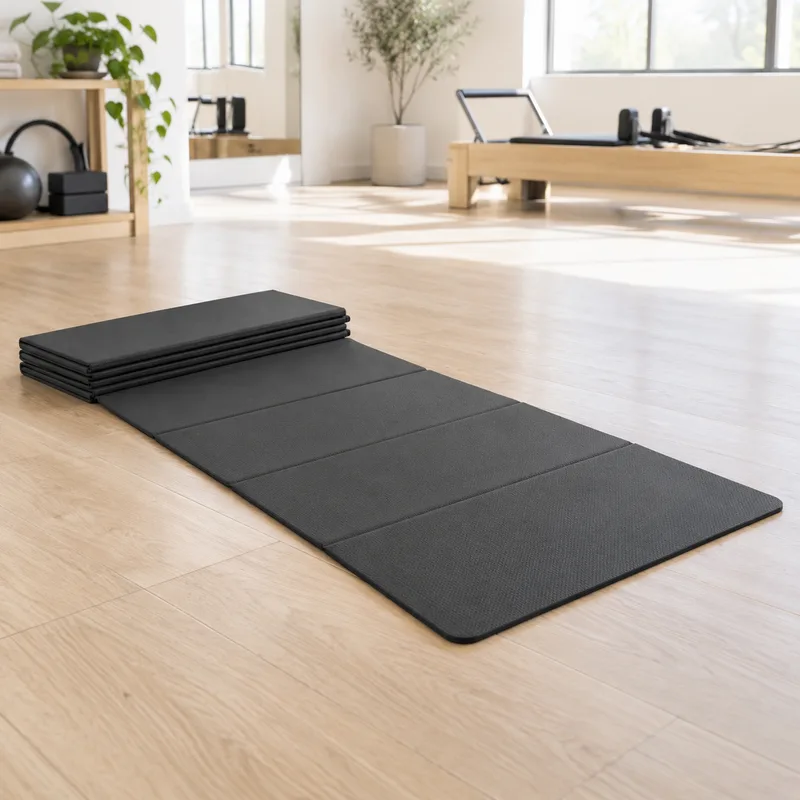
Folding Pilates Mat $29
TPE, 183 × 61 cm, folds flat for travel and small spaces
Ships in its own parcel, same delivery window.