
· Elise Hartley
Barre Socks: What to Wear to Barre Class, From the Floor Up
Search for barre socks and you will find one sock sold under three names: barre socks, Pilates socks, grip socks. They are the same product. What changes is what the class asks of it. A reformer moves under your foot. A barre floor stays still, but it is polished, dry and smooth, and you spend most of the hour on the ball of one foot, pushing sideways into a wooden rail. I teach mat and reformer, I take barre classes most weeks, and I have worn all three PIVELYA styles at the rail. This guide goes through what a barre class does to your feet, movement by movement, which style holds in each one, what else to wear, and how a barre studio expects you to behave once the socks are on.
What a barre class asks of your feet
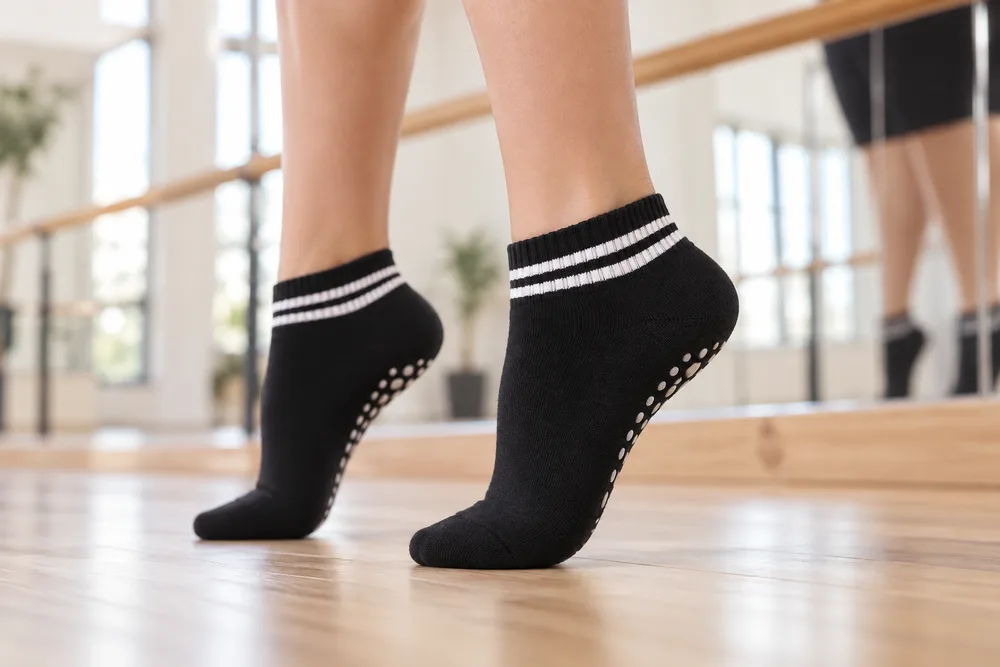
A barre class is built from a handful of ballet positions, repeated in small ranges. You rise onto the ball of the foot in relevé and stay there. You bend the knees over the toes in plié, in first or second position. You pulse an inch up and an inch down, dozens of times. You stand on one leg while the other lifts behind you. Between those sets you go to the mat for core work and stretching.
Each position loads the foot in a different place. In relevé, your weight sits on the ball of the foot and the toes, and the heel is in the air. In plié, the heel is down and the weight spreads across the whole sole. In second position the feet turn out, and the weight moves toward the inside edge of the foot. In all of them your hands press into the barre, which sends a sideways push through the standing foot. On a smooth floor, that sideways push is what makes a foot slide.
The floor is the other half of the story. Most barre studios use hardwood, laminate or a sprung dance floor, and they keep it clean and dry. That is the right floor for dance and a slippery floor for a bare sole or a cotton sock. Some studios put down a thin carpet or a mat for the standing sets. Carpet holds a little better, and it wears a plain sock through at the ball of the foot within a few weeks.
Do you need socks for barre?
Most barre studios ask you to wear grip socks, and a growing number write it into their rules. The reason is the floor. A bare foot on polished wood holds while it is dry and lets go the moment it sweats, which is somewhere in the first thigh set. A plain cotton sock slides from the first relevé. A grip sock holds in both cases, because the silicone or rubber under the foot does not care whether the skin above it is damp.
There is a second reason, and it is the shared floor. Dozens of feet cross the same boards every day. A sock keeps your skin off the floor and keeps the floor cleaner for the next class. Bring your own pair, even when the front desk lends them. A pair that other feet have stretched has lost the snug fit that keeps the grip seated under your own.
So the answer is yes in almost every studio, and the sock you need is the one you would wear on a reformer. For the full class-by-class picture, reformer, mat, barre and home, read do you need grip socks for Pilates.
Barre socks and Pilates socks are the same sock
A barre sock is a Pilates grip sock with a different label on the packet. Search results call them barre grip socks; the basket at the studio front desk calls them Pilates socks. Both are a knit sock with a grip pattern on the sole, in silicone or rubber, and both come in the same three cuts: crew, ankle and ballet. Nothing about the sole changes between the two names. What changes is which cut suits the room, and that is a question about the class, not about the sock.
On the PIVELYA range, the three styles are sold for Pilates and worn at the barre by the same buyers. The Crew carries a honeycomb silicone grip across the full sole, with a high-elasticity ribbed cuff, and the knit wraps the arch of the foot. The Ankle has a rubber sole the spec sheet describes as silenced and non-slip, over a cushioned bottom, with a hand-sewn toe that lies flat and a double-loop ribbed cuff. The Ballet has a non-slip sole under a covered toe and an open instep, held by two straps that cross the instep. The non-slip Pilates socks page goes through each sole in detail.
Movement by movement: what the foot does, and which style I reach for
This is the table I would hand a student before her first class. Find the movement in the left column, read what the foot is doing, then pick the cut. The middle column is the one that matters: once you know where the weight sits, the choice of sock follows.
| Barre movement | What the foot does | Style I reach for |
|---|---|---|
| Relevé at the barre, first position | Weight on the ball of the foot and the toes, heel high, hands pressing into the rail | Ankle: grip under the forefoot and a flat toe seam. Ballet when you want straps that hold the sock through the rise |
| Plié, first and second position | Heel down, knees over the toes, weight across the whole sole, feet turned out | Ankle or crew: a grip that reaches the heel and the inside edge of the foot |
| Pulses in relevé | Small, fast, repeated loads on the ball of the foot; the heel never touches | Ballet: the straps keep the sole seated through the pulses. Ankle if you prefer a cuff |
| Thigh work in a narrow V, heels lifted | A long hold on the forefoot with the knees bent, calves working | Ankle: the cushioned bottom for a long hold on the ball of the foot |
| Seat work, one leg lifted behind | One foot carries everything, hands on the barre, hip pressed forward | Crew: the cuff keeps the sock in place while the standing foot works alone |
| Core work on the mat | Heels and toes on a mat, feet flexed and pointed | Any of the three. Ballet for the least fabric on the foot |
| Stretching with one foot on the barre | One foot on the rail, the other flat on the floor, holding the position | Crew or ankle: the standing foot needs the heel grip |
| Early class in a cool studio | Same movements on a colder floor, calves slower to warm | Crew: the calf stays covered |
Which style to wear at the barre
The sole is the same job on all three PIVELYA styles: hold the foot on a smooth floor. The cut decides how much sock you wear above it, and at the barre that choice depends on the room, the class and your own feet.
Ankle: the everyday barre sock
The PIVELYA Ankle stops at the ankle bone, so it stays out of the way and leaves your knee and ankle line clear for the instructor to see in a plié. The rubber sole is silenced, which you notice in a room of mirrors and hard floor: the landings from relevé make no sound. The bottom is cushioned, so a long hold on the forefoot in thigh work sits on padding rather than on bare knit. The toe is hand sewn flat, so nothing bunches under your toes when you rise. Polyester and cotton knit, and the spec sheet lists it as breathable. Five colors, sold by the pair: black, off-white, gray, pink and purple. If you own one pair for barre, this is the one, and it is the pair I keep at the top of my bag.
Crew: for a cold studio and for seat work
The PIVELYA Crew reaches mid-calf, with a ribbed cuff at the top and two stripes. Cotton and polyester knit. The honeycomb silicone covers the full sole, so the heel holds in a plié and the forefoot holds in relevé. The cuff is a high-elasticity rib and the knit wraps the arch, so the sock does not creep when one foot carries all your weight in seat work. Wear it in a studio that keeps the air cool, in early classes on a cold floor, or whenever you like the calf covered. Five colors by the pair: black, white, pink, blue gray and purple.
Ballet: for the straps in relevé
In relevé your foot points and stays pointed, and a sock that creeps at the heel on a long rise takes its sole with it. The ballet cut covers the toes and the heel, leaves the instep open, and two straps cross the instep to keep the non-slip sole seated under the ball of the foot through the rise. Polyester knit. The spec sheet's dimensions are 8.3 in (21 cm) long by 3.1 in (8 cm) wide, laid flat, in one size. Three colors by the pair: black, gray and pink. The ballet grip socks page shows it on the foot.
At the barre I ask my students to think of the toes as five small fingers pressing into the floor. If a student's sock creeps at the heel in relevé, I suggest a ballet pair for the standing sets and an ankle pair for the rest of the hour. Both soles grip; only the amount of sock above them changes.Elise Hartley, Pilates instructor, mat and reformer since 2017
What to wear to barre class
Feet first, then the rest. Grip socks go on before you step onto the floor. Fitted leggings or capris, so the instructor can see your knee line in a plié and correct it. A top that stays down when you go to the mat for core work, because a loose tee ends up over your face in a bridge. Tie the hair back. Leave rings and bracelets in the bag; they tap the barre on every pulse. Bring water and a small towel. Leave street shoes at the door, because nearly every barre studio keeps them off the floor for the same reason it asks for socks.
Color is your call. Studios do not care whether the pair is black or pink. What they care about is the sole, so turn the sock over and look at the sole: the grip should run from the heel to the toe line, in many small contact points rather than a few large dots. The words buyers use on our reviews page are the ones I would use at the rail: stay put, don't slide, snug, soft.
Barre studio etiquette, once the socks are on
A barre room is small, mirrored and shared, and the habits that make it work are simple. Arrive early enough to put your socks on outside the room. Bring your own pair and wear a clean pair to every class. Keep shoes off the floor, and keep bags off the barre. Use the barre with your fingertips: it is there for orientation, and if you hang your weight on it the standing foot stops doing its work. Land quietly from relevé; the silenced sole on the Ankle helps, and so does control. Wipe down the barre and the mat when the class ends, and put the props back where you found them.
Rotation is part of the etiquette too. A pair that dries fully between classes keeps its shape and its grip, and a three-pair or six-pair pack of one style, in any mix of colors, means you always have a clean pair in the bag on a two-class day.
Why the barre floor is fuller than it used to be
Barre has grown alongside Pilates, and the two share students, studios and, as this guide has argued, socks. The booking figures for 2025 put both on the same list.
year-over-year growth in barre bookings worldwide in 2025, one of the ten most booked workouts on the platform
— ClassPass 2025 Look Back Report, 2025
in a row that Pilates was the most booked workout globally, the class most barre students also take
— ClassPass 2025 Look Back Report, 2025
More students on the same wood floor means more studios writing grip socks into their rules, and more first-timers arriving with a plain pair of cotton socks and finding out in the first relevé why the rule exists. If you are one of them, the fix is one pair of the right sock.
Caring for barre socks: keep the grip alive between classes
A barre sole rarely wears out at the barre. It wears out in the laundry. Our recommendation, and it is our recommendation rather than a care label: wash cold, turn the sock inside out so the grip faces in, skip the softener, and air dry flat. Silicone and rubber both dislike heat, and softener leaves a film on the grip that makes it slick on wood. The full routine, with how to rotate pairs, is in our guide on how to wash Pilates socks.
Questions people ask about barre socks
What socks should I wear for barre?
Wear a grip sock: a knit sock with a silicone or rubber grip on the sole. The grip should cover the ball of the foot and the heel, because a barre class loads both. The ankle cut is the everyday choice; a crew covers the calf in a cold studio, and a ballet pair holds on the foot with cross straps in relevé.
Is there a difference between barre and Pilates socks?
No. A barre sock is a Pilates grip sock sold under another name. Both are a knit sock with a grip pattern on the sole, in the same three cuts: crew, ankle and ballet. The only real question is which cut suits your studio and your class, and this guide answers it movement by movement.
Do people wear socks for barre?
Yes. Most barre studios ask for grip socks, and many require them, because the floor is polished wood or laminate and a bare foot or a plain sock slides on it in relevé. Bring your own pair, put it on before you step onto the floor, and keep street shoes off the floor.
What are barre socks?
Barre socks are grip socks: knit socks with silicone or rubber on the sole so the foot holds on a smooth floor. They exist because barre borrows its positions from ballet, relevé, plié and turnout, and performs them on a dance floor without ballet shoes. The grip does the job the shoe would do.
Where to go next
If your week mixes barre with mat classes, read Pilates socks for mat Pilates next: it covers where the sole matters on a mat and where it does not. If you want the full set of criteria, grip coverage, cut, cuff, fabric and care, our guide to the best Pilates socks walks through all five. Everything on the PIVELYA home page is built around them: three styles, thirteen colors, packs of one, three or six pairs, and one sock that holds at the barre as well as it holds on a reformer. The three styles are below.
Elise Hartley · Pilates instructor · mat & reformer since 2017
Elise teaches mat and reformer Pilates and has worn and compared more than 40 pairs of grip socks on wood floors, reformer carriages and rubber mats since 2017. She writes every guide on this site and checks each product claim against the spec sheet's own data.
Choose your pack
Pick a pack, a style and your colors. It goes straight to your cart.
Your choice: Crew: Black
🔥 Selling fast — limited stock
Price shown before sales tax.
Prices in US dollars.
Complete your order
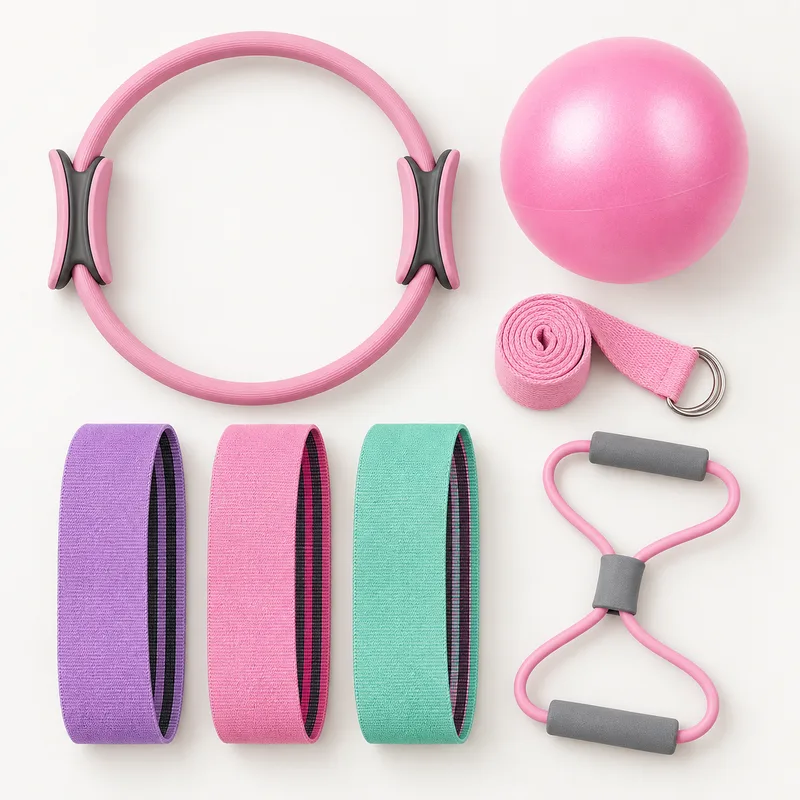
Pilates Kit $39
7 pieces: ring, ball, stretch strap, 3 hip bands, figure-8 expander
Ships in its own parcel, same delivery window.
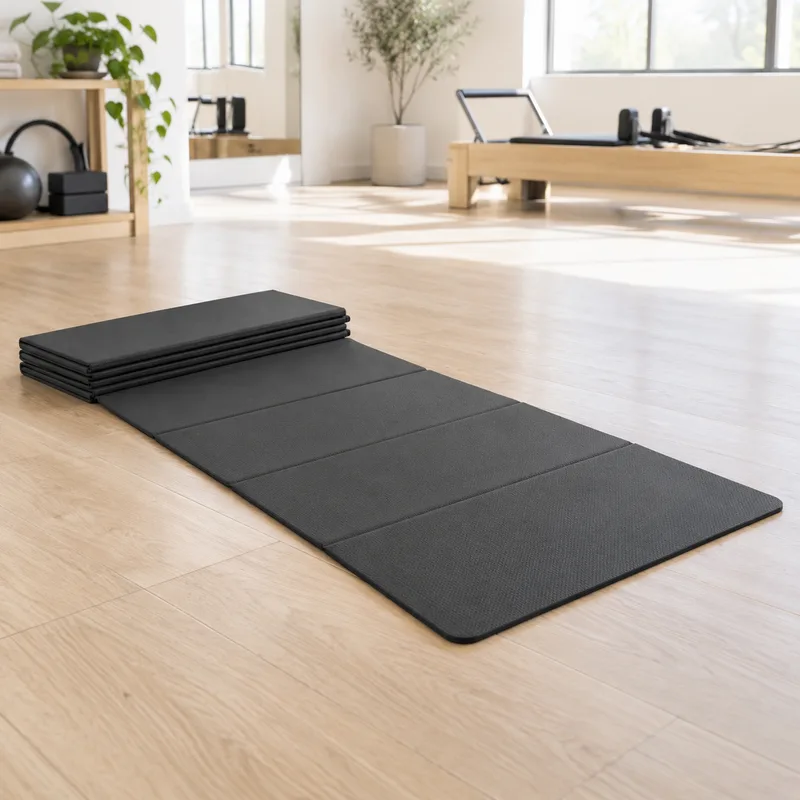
Folding Pilates Mat $29
TPE, 183 × 61 cm, folds flat for travel and small spaces
Ships in its own parcel, same delivery window.